
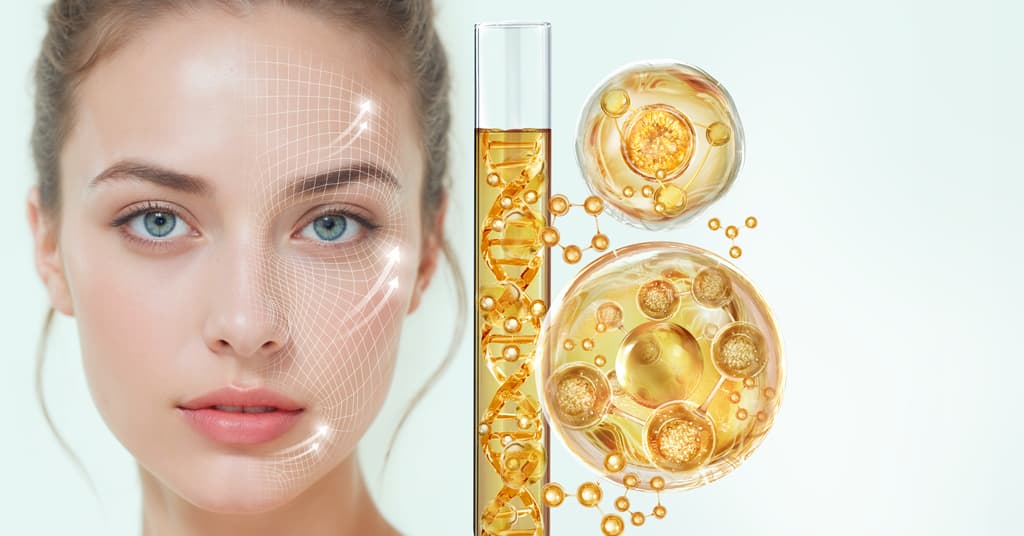
Why PDRN Is Suddenly Everywhere in Skincare
PDRN has become one of the most talked-about ingredients in modern skincare, especially in K-beauty, regenerative aesthetics, and anti-aging routines. It is often described with phrases like “salmon DNA,” “skin regeneration,” “repair molecule,” or “cell-renewal support,” which naturally makes people curious.
The interest around PDRN makes sense. Skincare has moved beyond simple moisturizing and exfoliation. Consumers now want ingredients that support long-term skin quality, barrier strength, hydration, elasticity, and post-procedure recovery. PDRN fits into this trend because it is associated with tissue repair, skin regeneration, anti-inflammatory activity, and aesthetic medicine applications. Reviews on PDRN and polynucleotides describe growing interest in their use for skin rejuvenation, wound healing, skin texture, hydration, and other dermatological applications.
However, PDRN is also one of the ingredients where expectations need to be realistic. It has stronger history in medical and professional aesthetic contexts than in ordinary at-home skincare. Injectable PDRN and topical PDRN are not the same experience. A serum or cream applied on intact skin cannot always be expected to behave like a professional treatment that delivers ingredients deeper into the skin.
This is why PDRN deserves a balanced explanation. It is not just hype, but it is also not a miracle ingredient that instantly repairs every skin concern. It is an emerging regenerative ingredient with promising mechanisms, growing popularity, and important limitations.
What Is PDRN?
PDRN stands for polydeoxyribonucleotide. It is made of DNA fragments, usually extracted and purified from biological sources such as salmon or trout sperm DNA in traditional medical and aesthetic applications. Scientific reviews describe PDRN as a nucleic-acid-based compound that has been studied for regenerative, anti-inflammatory, wound-healing, and tissue-repair properties.
In skincare language, PDRN is often called “salmon DNA,” but this nickname can be misleading if taken too literally. Cosmetic and medical-grade PDRN is not simply raw salmon material. It refers to purified DNA fragments processed for use in formulas or professional treatments.
PDRN is used because DNA fragments can provide biological building blocks and may interact with repair-related pathways in the skin. In professional settings, PDRN has been explored for skin rejuvenation, healing support, elasticity, texture, and post-procedure recovery.
The simplest explanation is this:
PDRN is a regenerative ingredient designed to support repair-focused skin behavior.
It is not an exfoliating acid like glycolic acid.
It is not an oil-control ingredient like salicylic acid.
It is not a classic brightening ingredient like vitamin C.
It is closer to a skin-support ingredient used in routines focused on repair, hydration, elasticity, recovery, and smoother-looking skin.
How PDRN Works on the Skin
PDRN is usually discussed through two main mechanisms: adenosine A2A receptor activation and the nucleotide salvage pathway.
These terms sound technical, but the basic idea is easy to understand.
PDRN appears to support biological processes involved in tissue repair, inflammation control, and cellular recovery. Research reviews describe PDRN activity as being connected to adenosine A2A receptor activation and salvage pathways, with reported anti-inflammatory, tissue-repairing, and wound-healing effects.
In skincare terms, this is why PDRN is often associated with:
Skin repair
Post-procedure recovery
Improved hydration appearance
Smoother-looking texture
Elasticity support
Calmer-looking skin
Barrier support
Anti-aging routines
PDRN does not work like a peeling ingredient. It does not remove dead skin cells in the same way exfoliating acids do. It is better understood as a support ingredient for skin regeneration and recovery.
PDRN vs Polynucleotides: Are They the Same?
PDRN and polynucleotides are related, but they are not always used interchangeably.
Both belong to a broader family of nucleic-acid-based regenerative ingredients. In aesthetics, polynucleotides and PDRN are often discussed together because both are used in skin rejuvenation and repair-focused treatments. A 2024 review on polynucleotides in aesthetic medicine discusses PDRN and PN in relation to safety, efficacy, and improvement in skin quality.
In simple terms:
PDRN usually refers to shorter DNA fragments.
Polynucleotides may refer to longer chains of nucleotides used in regenerative aesthetic treatments.
Both are associated with skin quality improvement, hydration, elasticity, and tissue repair, but formulations and treatment types vary. For consumers, the most important point is not the label alone. It is the delivery system, concentration, formula quality, and whether the product is topical or professional.
A topical cream labeled with PDRN is not the same as an injectable polynucleotide treatment performed in a clinic.
Why PDRN Became Popular in K-Beauty
Korean skincare is known for trends that focus on hydration, skin barrier health, glow, repair, and prevention. PDRN fits naturally into this philosophy because it is positioned as a regenerative and skin-quality-support ingredient.
K-beauty consumers often look for products that help skin appear:
Plumper
Calmer
Smoother
More hydrated
More radiant
Less tired
More resilient
PDRN’s popularity also comes from the rise of “post-procedure skincare.” Many people now receive treatments such as microneedling, lasers, peels, or skin boosters. After these procedures, the skin often needs hydration, soothing, and barrier support. PDRN became associated with this recovery-focused category because of its history in tissue repair and regenerative dermatology. Reviews have explored PDRN’s role in wound healing, anti-aging, post-procedure recovery, and aesthetic dermatology applications.
Another reason PDRN became popular is the uniqueness of the ingredient story. “Salmon DNA skincare” sounds unusual, memorable, and highly marketable. That helped the ingredient spread quickly across social media.
But popularity does not replace proper understanding. PDRN should be evaluated based on realistic skin benefits, evidence quality, formula delivery, and skin compatibility.
PDRN Benefits for Skin
PDRN is usually marketed for repair, hydration, elasticity, anti-aging, and skin recovery. Some of these benefits are supported more strongly in professional and medical contexts than in standard topical skincare. Still, the ingredient is interesting because its mechanisms align with several important skin goals.
1. PDRN May Support Skin Repair
PDRN is best known for its connection to tissue repair. It has been studied in medical contexts for wound healing, inflammation control, and regenerative support. A pharmacological review describes PDRN as having tissue-repairing, anti-ischemic, and anti-inflammatory activities.
In skincare, this is why PDRN is often used in products marketed for damaged, stressed, or tired-looking skin.
Skin repair is important when the skin barrier feels weak or when the skin looks rough, dull, or overworked. However, at-home PDRN products should not be expected to treat wounds or medical skin conditions. Cosmetic PDRN should be viewed as supportive skincare, not medical therapy.
If the skin barrier is compromised, a barrier-focused routine is still essential. Maruderm Repairing & Strengthening Barrier Cream is designed to support the skin barrier, hydration, comfort, and resilience with ingredients such as Ceramide NP, Panthenol, and Bifida Ferment Lysate.
This type of barrier support pairs naturally with the skin-repair conversation around PDRN because healthy skin repair starts with a stable barrier.
2. PDRN May Help Improve the Look of Hydration and Plumpness
Hydration is one of the most visible signs of healthy skin. When skin is hydrated, it appears smoother, fuller, and more elastic. When it is dehydrated, fine lines become more visible and the skin may look tired or flat.
PDRN is often used in formulas designed to improve the look of plumpness and skin vitality. Some studies and reviews describe PDRN-related effects on skin regeneration, cellular activity, and tissue support, which explains why it is associated with healthier-looking skin texture and hydration.
However, hydration in topical products usually depends not only on PDRN itself, but also on the formula around it. Ingredients such as hyaluronic acid, glycerin, panthenol, ceramides, and peptides often play a major role in how hydrated the skin feels.
For hydration and plumpness support, Maruderm Hyaluronic Acid & Collagen AntiAging Serum can be used in routines focused on moisture loss, fine lines, and smoother-looking skin. Its official product page describes it as a serum with hyaluronic acid, collagen support, niacinamide, and peptides for hydration and a plumper-looking complexion.
3. PDRN May Support Elasticity and Firmness Appearance
PDRN is frequently discussed in anti-aging because skin aging is closely connected to collagen quality, elasticity, barrier strength, and hydration. Reviews on PDRN describe potential roles in collagen synthesis, soft tissue regeneration, and skin revitalization, which is why it is often positioned as an ingredient for skin aging and rejuvenation.
Elasticity does not improve overnight. The skin needs consistent support, hydration, and protection from UV damage.
PDRN may support firmness appearance in certain contexts, but sunscreen, peptides, hydration, and barrier care remain essential. If UV exposure continues daily without protection, elasticity-related routines become less effective because UV radiation contributes to collagen and elastin damage.
This is why any anti-aging or regenerative routine should include sunscreen every morning.
4. PDRN May Help Calm the Look of Stressed Skin
Inflammation plays a major role in skin aging, sensitivity, acne marks, barrier damage, and post-procedure irritation. PDRN is often discussed for its anti-inflammatory activity in scientific literature.
In skincare, this is why PDRN products are often marketed for skin that looks stressed, tired, irritated, or weakened.
However, if the skin is actively burning, peeling, reacting, or inflamed, the first step should be simplification. Do not add several trendy ingredients at once. Reduce irritation first, then introduce new products gradually.
PDRN may be interesting for repair-focused routines, but barrier support remains the foundation.
5. PDRN May Be Useful in Post-Procedure Skincare Conversations
PDRN is strongly associated with professional aesthetic treatments because skin procedures often involve controlled injury and repair. Treatments such as microneedling, laser, or peels temporarily disrupt the skin and require proper recovery support.
PDRN’s history in wound healing and regenerative medicine explains why it is discussed in post-procedure contexts. Reviews have explored its use in aesthetic medicine, including skin regeneration and recovery-related applications.
That said, post-procedure skincare should be guided by the professional performing the treatment. After procedures, the skin may be more permeable, sensitive, and vulnerable. Not every trendy product is appropriate immediately after treatment.
For post-procedure care, gentle hydration, barrier support, and sunscreen are usually more important than experimenting with multiple actives.
Topical PDRN vs Injectable PDRN
This is one of the most important points to understand before trying PDRN.
PDRN has stronger evidence and longer history in injectable or professional contexts than in regular topical skincare. Topical PDRN creams and serums are newer and may have more limited evidence, especially when applied to intact skin.
The skin barrier is designed to keep large or water-loving molecules from easily entering deeper layers. This creates a challenge for topical PDRN because DNA fragments may not penetrate deeply without specific delivery systems or professional techniques.
A 2025 review notes that dermatological evidence for PDRN is still limited but accumulating, and the ingredient is being explored for anti-inflammatory, regenerative, and skin-quality applications.
This does not mean topical PDRN is useless. It means expectations should be realistic.
Topical PDRN may support surface hydration, barrier comfort, and cosmetic skin quality depending on the formula.
Injectable or professional PDRN treatments are different because they bypass the outer skin barrier and deliver the ingredient deeper.
Consumers should not expect a leave-on serum to perform like a clinic treatment.
Is PDRN Safe?
PDRN is generally discussed as well tolerated in professional literature, but safety depends on the form, source, purity, delivery method, and individual skin response. Reviews on PDRN and polynucleotides discuss their use in aesthetic medicine, including safety and efficacy considerations, but also point to the need for continued research and proper clinical context.
For topical skincare, users should be cautious if they have:
Very sensitive skin
Fish allergy
Damaged barrier
Active irritation
Broken skin
Recent aggressive procedure
History of allergic reactions
Reactive skin conditions
If PDRN is fish-derived, people with fish allergies should be especially cautious and consult a professional before use.
Patch testing is recommended before applying any new PDRN product to the full face.
Who Should Consider PDRN?
PDRN may be interesting for people whose skincare goals include:
Repair-focused routines
Hydration support
Tired-looking skin
Loss of elasticity
Fine lines
Dullness
Post-procedure recovery support
Barrier-stressed skin
Anti-aging prevention
Skin quality improvement
It may be especially appealing to people who like regenerative skincare trends and want a gentler alternative to aggressive exfoliation.
However, PDRN should not replace proven skincare basics. A good routine still needs cleansing, hydration, barrier support, and sunscreen.
Who Should Be Careful with PDRN?
PDRN may not be the best first choice if your skin is already irritated, inflamed, or overloaded with products.
Be careful if:
Your skin burns easily
You have active dermatitis
You are allergic to fish-derived ingredients
You recently over-exfoliated
Your barrier is damaged
You are already using many actives
You expect instant lifting or scar removal
If your skin is reactive, start with barrier repair before adding PDRN or other trend ingredients.
What to Know Before Trying PDRN
Before trying PDRN, remember these points:
PDRN is promising, but not magic.
Professional PDRN and topical PDRN are different.
Results depend heavily on formulation and delivery.
Topical PDRN evidence is still developing.
Barrier support and sunscreen remain essential.
People with fish allergies should be cautious.
Sensitive skin should patch test first.
A simple routine is better than layering too many actives.
This balanced approach helps you avoid disappointment and irritation.
Best Beginner Routine Around PDRN-Inspired Skin Goals
If your goal is repair, hydration, and elasticity, you do not need to build an overly complicated routine.
Morning Routine
Gentle cleanser
Hydrating serum
Barrier-supporting moisturizer if needed
Maruderm SPF 50+ Vitamin C Sun Cream
Evening Routine
Gentle cleanser
PDRN product if tolerated
Maruderm Repairing & Strengthening Barrier Cream
Hydration Support Option
If your skin feels dehydrated or fine lines look more visible, Maruderm Hyaluronic Acid & Collagen AntiAging Serum can be used before cream to support plumpness and smoother-looking skin.
This routine supports the same skin goals people usually associate with PDRN: hydration, barrier comfort, skin quality, and elasticity.
FAQ
1. What is PDRN in skincare?
PDRN stands for polydeoxyribonucleotide. It is a regenerative ingredient made from purified DNA fragments and used in skincare for repair, hydration, elasticity, and skin quality support.
2. Is PDRN the same as salmon DNA?
PDRN is often called salmon DNA because many traditional sources are fish-derived, but skincare-grade PDRN refers to purified DNA fragments, not raw salmon material.
3. What does PDRN do for skin?
PDRN is used to support repair, hydration, elasticity, smoother texture, and recovery-focused skincare routines.
4. Is topical PDRN the same as injectable PDRN?
No. Injectable PDRN is delivered deeper into the skin, while topical PDRN must work through the skin barrier and may have more limited effects.
5. Is PDRN good for anti-aging?
PDRN is often used in anti-aging routines because it is associated with skin repair, collagen support, hydration, and elasticity, but results depend on formula and delivery.
6. Can PDRN repair the skin barrier?
PDRN may support repair-focused routines, but barrier repair also needs ingredients like ceramides, panthenol, hydration, and sunscreen.
7. Can sensitive skin use PDRN?
Sensitive skin should be cautious. Patch testing is recommended, especially if the product is fish-derived or the skin barrier is weak.
8. Can people with fish allergies use PDRN?
People with fish allergies should be careful with fish-derived PDRN and consult a professional before use.
9. Does PDRN work instantly?
No. PDRN should not be expected to work overnight. Skin repair, hydration, and elasticity support require consistent use over time.
10. What should I use with PDRN?
PDRN works best in a simple routine with hydration, barrier support, and daily sunscreen.
How to Use PDRN in a Skincare Routine
PDRN is usually discussed as a repair-focused and regeneration-inspired ingredient, but how you use it matters. A PDRN product cannot deliver good results if the rest of the routine is irritating, dehydrating, or overloaded with too many active ingredients.
The best routine around PDRN should be calm, hydrating, and barrier-supportive.
This is especially important because PDRN is often used by people who are trying to improve skin that feels tired, stressed, thin, dry, sensitive, or slow to recover. If the skin barrier is already weak, adding too many ingredients at once may create more irritation instead of better results.
A smart PDRN routine should focus on:
Gentle cleansing
Hydration
Barrier support
Daily sunscreen
Slow introduction
Avoiding over-exfoliation
Consistent use over time
PDRN should not be treated like a strong exfoliating acid or retinoid. It is better placed in a recovery-focused routine where the skin has enough moisture and protection to function properly.
Scientific reviews describe PDRN as a regenerative molecule connected to tissue repair, anti-inflammatory activity, and wound-healing pathways, but topical cosmetic use still depends heavily on formulation, delivery system, and consistency.
Morning Routine with PDRN
A morning routine should protect the skin from daily stress. This includes UV exposure, pollution, dryness, temperature changes, and environmental irritation.
If you use a PDRN serum or cream in the morning, it should be layered in a way that supports hydration and comfort without making the skin feel heavy.
Step 1: Gentle Cleanser
Start with a mild cleanser or a simple rinse depending on your skin type.
If your skin is oily, cleansing in the morning can help remove overnight sebum.
If your skin is dry or sensitive, avoid aggressive cleansing. Over-cleansing can weaken the skin barrier and make active ingredients feel more irritating.
The goal is clean skin, not stripped skin.
Step 2: PDRN Serum or Repair Serum
If your PDRN product is a serum, apply it after cleansing and before moisturizer.
Use a thin, even layer. More product does not mean faster repair. PDRN-inspired routines work best with consistency, not over-application.
If you do not use a PDRN product directly but want a similar hydration and skin-quality support routine, Maruderm Hyaluronic Acid & Collagen AntiAging Serum can be used in this step. It is officially positioned as a serum for intense hydration and a plumper-looking skin appearance, with niacinamide and peptides supporting a smoother and more vibrant complexion.
This step is useful when the skin looks dehydrated, tired, or less elastic.
Step 3: Barrier Cream If Needed
If your skin feels dry, tight, or sensitive, apply a barrier-supporting cream after serum.
This is especially important if your routine includes retinol, exfoliating acids, vitamin C, or post-procedure recovery care.
Maruderm Repairing & Strengthening Barrier Cream can be used as a moisturizer step in barrier-focused routines. Its official product page describes it as a nourishing moisturizer designed to support the skin barrier, improve hydration, and enhance skin resilience and comfort with Ceramide NP, Panthenol, and Bifida Ferment.
A strong barrier helps the skin tolerate active ingredients better.
Step 4: Sunscreen
Sunscreen is mandatory in any repair, anti-aging, or brightening routine.
PDRN may be associated with repair and regeneration, but it does not protect the skin from UV damage. UV exposure can worsen pigmentation, weaken collagen, increase visible aging, and slow skin recovery.
Apply Maruderm SPF 50+ Vitamin C Sun Cream as the final morning step. The official product page describes it as a daily sunscreen formulated for broad-spectrum UV protection while supporting brightness and hydration with a lightweight texture.
No regenerative skincare routine is complete without daily SPF.
Evening Routine with PDRN
The evening routine should focus on repair, recovery, and hydration. This is often the best time to use PDRN because the skin is not exposed to direct sunlight and can focus on overnight recovery.
Step 1: Cleanse Properly
Evening cleansing is important because sunscreen, makeup, oil, sweat, and pollution collect on the skin during the day.
If sunscreen or makeup is not removed properly, the skin may look dull or congested.
Cleanse gently and avoid harsh scrubbing. The skin should feel fresh but not tight.
Step 2: Apply PDRN Product
Apply your PDRN serum or cream to clean skin.
If the product is lightweight, use it before moisturizer.
If the product is a cream, it may be used as the moisturizing step.
PDRN works best when the skin is calm and hydrated. If your skin is burning, peeling, or irritated, simplify the routine first before adding new ingredients.
Step 3: Seal with Barrier Support
After PDRN, use a moisturizer or barrier cream if your skin needs comfort.
This is especially useful for dry, sensitive, mature, post-procedure, or over-exfoliated skin.
Maruderm Repairing & Strengthening Barrier Cream is a good support option for routines focused on hydration, barrier strength, and skin comfort.
This step helps prevent moisture loss and supports a calmer skin environment overnight.
How Often Should You Use PDRN?
Most topical PDRN products are designed for regular use, but frequency depends on skin tolerance and product instructions.
A safe beginner approach is:
Start once daily
Use for 2–3 weeks
Watch for irritation
Increase to twice daily if tolerated
Keep the rest of the routine simple
If your skin is sensitive, start every other day.
If your skin is barrier-damaged, focus on moisturizer and sunscreen first, then introduce PDRN later.
If your skin is post-procedure, follow your dermatologist or aesthetic professional’s instructions instead of guessing.
How Long Does PDRN Take to Work?
PDRN is not an instant-result ingredient. It should not be expected to lift, repair, smooth, and brighten the skin overnight.
A realistic timeline may look like this:
Week 1–2: Skin may feel more hydrated and comfortable
Week 3–4: Skin may look calmer and less tired
Week 6–8: Texture and elasticity may appear improved
Week 8–12: Skin may look more resilient and balanced with consistent use
Topical PDRN results depend strongly on the formula and delivery system. Current discussions around topical PDRN often emphasize that most stronger clinical data comes from injectable or professional forms, while topical skincare evidence is still developing.
Consistency matters more than applying too much product.
PDRN for Different Skin Concerns
PDRN is usually marketed for repair and regeneration, but different skin concerns need different routine support.
PDRN for Dry and Dehydrated Skin
Dry or dehydrated skin often looks tired, dull, tight, and less elastic. Fine lines may appear more visible because the outer skin layers lack moisture.
PDRN may support a repair-focused routine, but hydration is still essential.
For dry skin, combine PDRN with:
Hyaluronic acid
Panthenol
Ceramides
Peptides
Barrier cream
Sunscreen
A simple dry skin routine:
Morning:
Cleanser
PDRN serum or Maruderm Hyaluronic Acid & Collagen AntiAging Serum
Maruderm SPF 50+ Vitamin C Sun Cream
Evening:
Cleanser
PDRN product
Maruderm Repairing & Strengthening Barrier Cream
This routine supports hydration, comfort, and daily protection.
PDRN for Sensitive Skin
Sensitive skin should be cautious with every new ingredient, including PDRN.
Even if an ingredient is marketed as regenerative or soothing, the full formula still matters. Preservatives, fragrance, texture, concentration, and other active ingredients can all affect tolerance.
Sensitive skin should introduce PDRN slowly.
Use it:
Every other night at first
On calm skin
Without strong acids in the same routine
With barrier cream
With daily sunscreen
If burning, stinging, redness, or itching occurs, stop and simplify the routine.
Sensitive skin usually benefits more from a slow routine than a trendy routine.
PDRN for Mature Skin
Mature skin often needs support for hydration, elasticity, firmness appearance, and barrier strength.
PDRN is appealing in mature skincare because it is associated with repair and skin rejuvenation. Research reviews describe PDRN and related polynucleotides as being explored in aesthetic medicine for skin quality, regeneration, and aging-related concerns.
However, mature skin still needs the basics:
Hydration
Peptides
Moisturizer
Sunscreen
Gentle cleansing
Consistent night care
A mature skin routine should not rely only on PDRN. It should combine repair-focused ingredients with daily protection.
PDRN for Skin Barrier Repair
A damaged skin barrier can make the skin feel tight, dry, red, reactive, and uncomfortable. Many people become interested in PDRN because their skin feels damaged from over-exfoliation, retinol overuse, harsh cleansing, or environmental stress.
PDRN may fit into a repair-focused routine, but barrier repair must also include ingredients that directly support the moisture barrier.
Look for:
Ceramides
Panthenol
Bifida ferment
Hyaluronic acid
Glycerin
Gentle moisturizers
Sunscreen
Maruderm Repairing & Strengthening Barrier Cream is specifically positioned for barrier support, hydration, soothing, and skin resilience, making it a practical partner in a PDRN-inspired repair routine.
If the barrier is severely irritated, pause strong actives before adding PDRN.
PDRN for Post-Procedure Skin
PDRN is strongly associated with aesthetic procedures because professional treatments often focus on controlled repair. However, post-procedure skincare should never be random.
After microneedling, laser, peeling, or skin booster treatments, the skin barrier may be temporarily compromised. This can make the skin more sensitive and more permeable.
Use only products recommended by your provider.
Do not apply random PDRN serums immediately after professional treatments unless your dermatologist or aesthetic practitioner approves them.
Post-procedure care usually focuses on:
Sterility
Barrier repair
Hydration
Soothing
Sun protection
Avoiding irritation
Avoiding unnecessary actives
PDRN may be used in professional contexts, but timing and product quality matter. Reviews on PDRN and polynucleotides discuss professional aesthetic applications, but topical home use should be approached more carefully.
PDRN for Acne Marks and Uneven Texture
PDRN is sometimes discussed for acne marks, scars, and post-inflammatory damage because of its repair-focused reputation. However, expectations should be realistic.
If your concern is a flat dark mark, ingredients like tranexamic acid, niacinamide, azelaic acid, vitamin C, and sunscreen are more directly used in brightening routines.
If your concern is a true indented acne scar, topical PDRN alone is unlikely to fully correct deep texture.
Professional treatments may be needed for deeper scars.
PDRN may support overall skin quality and recovery, but it should not be treated as a guaranteed scar-removal ingredient.
Can PDRN Be Used with Retinol?
PDRN and retinol can exist in the same overall skincare plan, but they should be combined carefully.
Retinol supports skin renewal and can improve texture, fine lines, and acne-prone skin. However, it can also cause dryness, peeling, and irritation if used too often.
PDRN is more repair-focused and may be better suited to recovery nights.
A balanced schedule:
Monday: Retinol
Tuesday: PDRN + barrier cream
Wednesday: Hydration only
Thursday: Retinol
Friday: PDRN + barrier cream
Saturday: Hydration only
Sunday: PDRN or rest
This helps support skin renewal without overwhelming the barrier.
Do not start retinol and PDRN at the same time if your skin is sensitive. Introduce one product first.
Can PDRN Be Used with Vitamin C?
PDRN can be used in the same routine plan as vitamin C, but sensitive skin may prefer separating them.
Vitamin C is usually used in the morning for antioxidant and brightening support.
PDRN can be used at night for repair-focused care.
A simple structure:
Morning:
Vitamin C
Sunscreen
Evening:
PDRN
Barrier cream
If your skin is stable, they may be used in the same day. If your skin is sensitive, avoid layering too many active ingredients at once.
Can PDRN Be Used with Exfoliating Acids?
PDRN can be used in routines that include exfoliating acids, but not aggressively.
Exfoliating acids such as glycolic acid, lactic acid, and salicylic acid help remove dead skin buildup and improve texture. But too much exfoliation can damage the skin barrier.
If you use acids, use PDRN on recovery nights.
A balanced schedule:
Monday: Exfoliating acid
Tuesday: PDRN + barrier cream
Wednesday: Hydration only
Thursday: Exfoliating acid
Friday: PDRN + barrier cream
Saturday: Hydration only
Sunday: Rest
This gives the skin both renewal and recovery.
Can PDRN Be Used with Niacinamide?
Yes, PDRN and niacinamide can work well in the same routine.
Niacinamide supports the skin barrier, oil balance, redness reduction, and uneven tone. PDRN is more repair-focused.
Together, they may fit routines for:
Sensitive skin
Stressed skin
Uneven tone
Barrier support
Early aging
Post-acne recovery
Dullness
If the formula already contains multiple active ingredients, introduce slowly.
Can PDRN Be Used with Hyaluronic Acid?
Yes. PDRN and hyaluronic acid are a natural pairing because hydration supports nearly every repair-focused routine.
Hyaluronic acid helps the skin look plumper and more comfortable, while PDRN is positioned around repair and skin quality.
A hydration-focused routine can use Maruderm Hyaluronic Acid & Collagen AntiAging Serum before a PDRN cream or barrier moisturizer.
This combination is especially useful for dry, mature, dehydrated, or tired-looking skin.
What Should You Avoid When Using PDRN?
Avoid turning PDRN into another reason to overload the skin.
Be careful with:
Too many serums at once
Strong exfoliating acids
Daily retinol from the beginning
Harsh cleansers
Scrubs
Peeling treatments
Applying after procedures without approval
Using on broken or infected skin
Ignoring allergic reactions
Skipping sunscreen
PDRN is best used in a calm routine, not a chaotic one.
Possible Side Effects of PDRN Skincare
Topical PDRN is generally marketed as gentle, but side effects are still possible.
Possible reactions include:
Redness
Stinging
Itching
Breakouts
Irritation
Allergic response
Sensitivity on damaged skin
People with fish allergies should be especially cautious if the PDRN is fish-derived.
If irritation occurs, stop the product and return to a simple barrier-support routine.
If swelling, severe itching, hives, or breathing difficulty occur, seek medical help immediately.
How to Patch Test PDRN
Patch testing is important, especially for sensitive skin.
A simple patch test:
Apply a small amount behind the ear or on the inner arm.
Wait 24–48 hours.
Check for redness, itching, swelling, or burning.
If there is no reaction, apply to a small area of the face.
If tolerated, begin regular use slowly.
Patch testing does not guarantee zero reaction, but it lowers the risk of applying a product to the entire face too quickly.
How to Know If PDRN Is Working
PDRN results are usually subtle and gradual.
Signs that your routine may be working include:
Skin feels more hydrated
Skin looks calmer
Texture appears smoother
Skin feels less tight
Complexion looks healthier
Skin appears more resilient
Fine lines look softer due to hydration
Recovery from irritation feels more stable
Do not judge results after only a few days.
Repair-focused ingredients need time.
Why Some People Do Not See Results from PDRN
If PDRN does not seem to work, several reasons may be involved:
The formula has poor delivery
The skin barrier is too damaged
The routine is too irritating
Sunscreen is missing
Expectations are unrealistic
The product is not used consistently
The concern needs stronger treatment
The issue is texture or scarring, not only repair
The product is not suited to your skin type
PDRN is not a universal solution. It is one supportive ingredient category.
Best Routine Structure Around PDRN
A balanced PDRN-inspired routine should be simple.
Morning
Gentle cleanser
Maruderm Hyaluronic Acid & Collagen AntiAging Serum
Maruderm SPF 50+ Vitamin C Sun Cream
Evening
Gentle cleanser
PDRN product if tolerated
Maruderm Repairing & Strengthening Barrier Cream
This routine supports hydration, repair, barrier comfort, and protection without overloading the skin.
FAQ
1. How do I use PDRN in skincare?
Apply PDRN after cleansing and before moisturizer if it is a serum. If it is a cream, use it as the moisturizer step.
2. Should PDRN be used morning or night?
PDRN can be used morning or night, but many people prefer it at night in a repair-focused routine.
3. Can I use PDRN every day?
Many topical PDRN products can be used daily if tolerated, but sensitive skin should start slowly.
4. Can I use PDRN with retinol?
Yes, but it is better to use retinol on selected nights and PDRN on recovery nights if your skin is sensitive.
5. Can I use PDRN with vitamin C?
Yes, but sensitive skin may prefer vitamin C in the morning and PDRN at night.
6. Can I use PDRN after microneedling or laser?
Only if your dermatologist or aesthetic provider approves it. Post-procedure skin needs careful product selection.
7. Is PDRN good for sensitive skin?
It may be suitable, but sensitive skin should patch test first and introduce it slowly.
8. Can PDRN help acne scars?
Topical PDRN may support skin quality, but deep acne scars usually need professional treatments.
9. Can PDRN replace moisturizer?
A PDRN cream may act as a moisturizer, but a PDRN serum usually needs moisturizer afterward.
10. What should I use with PDRN?
Use PDRN with hydration, barrier support, and daily sunscreen for the best routine structure.
Long-Term Strategy: Is PDRN Worth Adding to Your Skincare Routine?
PDRN is one of the most interesting ingredients in modern skincare because it sits between beauty, dermatology, and regenerative aesthetics. It is not a classic moisturizer. It is not an exfoliating acid. It is not a retinoid. It is not a pigment inhibitor in the traditional sense.
Instead, PDRN is usually positioned as a repair-focused ingredient for skin quality, hydration, elasticity, and recovery support.
That makes it appealing, especially for people whose skin looks tired, stressed, dry, dull, thin, or less resilient. It also explains why PDRN has become popular in K-beauty and aesthetic medicine conversations.
But the most important question is not whether PDRN is trendy.
The real question is:
Does your skin actually need it?
PDRN may be worth trying if your routine already has the basics in place: gentle cleansing, hydration, barrier support, and daily sunscreen. It may be useful if your skin needs extra support for repair, comfort, elasticity, or post-treatment recovery.
However, PDRN should not be treated as a replacement for proven skincare foundations. It works best as a supportive ingredient, not as the only active in a routine.
The strongest long-term strategy is to use PDRN carefully, keep expectations realistic, and combine it with ingredients that already have clear value for skin health.
Why PDRN Is Not a Miracle Ingredient
PDRN is promising, but it is not magic.
Many skincare trends become popular because they sound scientific and new. PDRN has a strong scientific background in regenerative medicine and aesthetic treatments, but topical skincare is more complicated. A cream or serum applied to the surface of the skin must pass through the skin barrier, and that barrier is designed to limit penetration.
This means professional PDRN treatments and at-home PDRN skincare are not the same.
Professional treatments may deliver PDRN deeper into the skin, while topical products depend on formula design, delivery systems, ingredient stability, and skin condition.
This is why topical PDRN should be viewed as supportive skincare rather than a guaranteed transformation.
It may help the skin look more hydrated, smoother, calmer, and more resilient, but it should not be expected to instantly erase wrinkles, lift sagging skin, remove scars, or replace dermatology procedures.
Scientific reviews describe PDRN and polynucleotides as promising regenerative agents in dermatology and aesthetic medicine, but they also emphasize that clinical evidence, formulation quality, and treatment context matter.
Who Is PDRN Best For?
PDRN may be most suitable for people who want a repair-focused skincare approach.
It may be worth considering if your skin is:
Dry
Tired-looking
Dull
Dehydrated
Mature
Stressed
Barrier-weakened
Fine-lined
Less elastic
Recovering from irritation
Interested in regenerative skincare
Looking for post-procedure support with professional guidance
PDRN fits best into routines where the goal is improving overall skin quality rather than treating one isolated concern.
It is especially appealing for people who want skin that looks healthier, smoother, plumper, and more resilient over time.
Who May Not Need PDRN?
Not every routine needs PDRN.
You may not need it if your skin concerns are better addressed by other ingredients.
For example:
If your main concern is acne, ingredients like salicylic acid, azelaic acid, retinoids, and niacinamide may be more directly useful.
If your main concern is dark spots, tranexamic acid, vitamin C, niacinamide, azelaic acid, and sunscreen may be more targeted.
If your main concern is damaged barrier, ceramides, panthenol, hyaluronic acid, and barrier creams may be more practical.
If your main concern is deep wrinkles or sagging, professional treatments may be more effective than topical PDRN alone.
PDRN can support skin quality, but it should not be chosen only because it is trending. Choose it because it fits your skin goal.
PDRN vs Retinol: Which Is Better?
PDRN and retinol are not the same type of ingredient.
Retinol supports skin renewal. It helps improve the appearance of fine lines, texture, clogged pores, and uneven skin over time. It is one of the most established anti-aging ingredients in skincare, but it can cause irritation if introduced too quickly.
PDRN is more repair-focused. It is associated with hydration, recovery, skin quality, and regeneration-supporting routines. It is usually positioned as gentler, but topical results depend heavily on formulation and delivery.
The easiest way to compare them:
Retinol renews. PDRN supports repair.
Choose retinol if your main concern is:
Texture
Clogged pores
Fine lines
Acne-prone skin
Stronger anti-aging renewal
Choose PDRN if your main concern is:
Repair support
Dehydration
Skin recovery
Barrier stress
Tired-looking skin
Gentle anti-aging support
Many people may use both, but not necessarily in the same routine. Retinol can be used on renewal nights, while PDRN can be used on recovery nights.
PDRN vs Peptides: Which Is Better?
PDRN and peptides both fit into supportive skincare, but they work differently.
Peptides are short chains of amino acids used to support the appearance of firmness, smoothness, hydration, and skin structure. They are common in anti-aging creams and serums because they are generally gentle and suitable for long-term use.
PDRN is made from purified DNA fragments and is associated with regenerative repair pathways, skin recovery, and tissue-support concepts.
The easiest comparison:
Peptides support firmness and structure. PDRN supports repair-focused skin quality.
Choose peptides if your main goal is:
Fine lines
Firmness
Elasticity
Anti-aging maintenance
Sensitive skin support
Choose PDRN if your main goal is:
Skin recovery
Regeneration-focused care
Post-procedure support
Tired or stressed skin appearance
They can also complement each other. A routine may include a PDRN product plus peptide-supportive products, especially if the skin needs both repair and elasticity support.
Maruderm Hyaluronic Acid & Collagen AntiAging Serum can fit into this type of routine because it supports hydration, plumpness, and smoother-looking skin with peptide and hydration-focused ingredients.
PDRN vs Hyaluronic Acid: Which Is Better?
Hyaluronic acid and PDRN are often mentioned together because both are used in hydrating and skin-quality routines.
Hyaluronic acid is primarily a hydration ingredient. It helps attract and hold water, making the skin look plumper, smoother, and more comfortable.
PDRN is more repair-focused and regeneration-associated.
The easiest comparison:
Hyaluronic acid hydrates. PDRN supports repair-oriented skin quality.
If your skin is simply dehydrated, hyaluronic acid may be the more straightforward choice.
If your skin is dehydrated, stressed, and slow to recover, PDRN may be an interesting addition.
For most people, hydration should come first. A PDRN routine works better when the skin already has enough moisture support.
PDRN vs Ceramides: Which Is Better for Barrier Repair?
Ceramides are essential lipids naturally found in the skin barrier. They help reduce moisture loss and keep the skin barrier strong.
PDRN is not a classic barrier lipid. It is more connected to repair and regeneration concepts.
If the skin barrier is damaged, ceramides and panthenol are usually more direct and practical first steps.
Maruderm Repairing & Strengthening Barrier Cream is relevant here because it contains barrier-supporting ingredients such as Ceramide NP, Panthenol, and Bifida Ferment, and is designed to help leave the skin calm, smooth, and protected.
The easiest comparison:
Ceramides rebuild barrier support. PDRN supports repair-focused skin quality.
If your skin burns, stings, peels, or reacts to everything, start with barrier repair first. Add PDRN later if needed.
Can PDRN Help with Skin Barrier Damage?
PDRN may support repair-focused skincare, but a damaged skin barrier needs more than one trendy ingredient.
Barrier damage usually requires:
Gentle cleansing
Ceramides
Panthenol
Hydration
Moisturizer
Sunscreen
Time
Reduced active ingredients
If your skin barrier is damaged, do not immediately add PDRN, retinol, vitamin C, exfoliating acids, and brightening serums together.
Start simple.
A barrier-repair routine can look like this:
Morning:
Gentle cleanser
Barrier cream if needed
Sunscreen
Evening:
Gentle cleanser
Barrier cream
Once the skin feels stable, PDRN can be introduced slowly as an additional support step.
Can PDRN Help with Acne Scars?
PDRN is often discussed in connection with acne scars because of its regenerative reputation. However, expectations should be realistic.
Topical PDRN may help support skin quality, hydration, and recovery appearance, but deep acne scars are structural changes in the skin. Indented scars, ice pick scars, boxcar scars, and rolling scars often require professional treatments such as microneedling, laser, subcision, or chemical reconstruction methods.
PDRN may be used in professional aesthetic settings as part of a broader scar or rejuvenation plan, but an at-home topical serum should not be expected to erase deep scars.
If your concern is post-acne dark marks, ingredients like tranexamic acid, niacinamide, azelaic acid, vitamin C, and sunscreen are more directly relevant.
If your concern is true acne scars, professional consultation is usually the better route.
Can PDRN Help with Fine Lines?
PDRN may support the appearance of fine lines by improving skin hydration, texture, and repair-focused skin quality. However, fine lines often need a combination approach.
The best routine for fine lines usually includes:
Hydration
Peptides
Sunscreen
Retinol if tolerated
Barrier support
Consistent moisturizing
PDRN can be one part of that routine, but not the entire solution.
If fine lines are caused mainly by dehydration, hyaluronic acid and moisturizer may create a more noticeable early improvement.
If fine lines are caused by collagen decline and sun exposure, sunscreen and long-term active support become essential.
Can PDRN Help with Redness and Irritation?
PDRN is associated with anti-inflammatory and tissue-repair activity in scientific literature, which explains why it is often marketed for stressed or irritated-looking skin.
However, if your skin is actively red, burning, or reactive, the first step should still be simplifying the routine.
Redness can be caused by many different issues:
Over-exfoliation
Retinol irritation
Allergic reaction
Rosacea-prone skin
Barrier damage
Harsh cleansers
Too many active ingredients
Sun exposure
PDRN may support recovery-focused skincare, but it should not be used to cover up ongoing irritation from an overly aggressive routine.
Calm the skin first. Then add supportive ingredients slowly.
Can PDRN Help with Post-Procedure Recovery?
PDRN is strongly associated with post-procedure recovery because it has a history in tissue repair and aesthetic medicine. A recent post-procedure review discusses PDRN in relation to tissue repair, angiogenesis, cytokine activity, and recovery support in aesthetic medicine contexts.
However, this does not mean you should apply any PDRN product immediately after laser, microneedling, peeling, or skin booster treatments.
Post-procedure skin is vulnerable. The skin barrier may be temporarily open, sensitive, and more reactive. Products that are safe for normal daily use may not be appropriate immediately after a procedure.
Always follow the instructions of the professional who performed the treatment.
Do not experiment with new PDRN serums on freshly treated skin without approval.
How to Choose a PDRN Product
If you want to try PDRN, choose carefully.
Look for:
Clear ingredient listing
Reputable brand
Stable packaging
Supportive ingredients such as hyaluronic acid, panthenol, ceramides, or peptides
Fragrance-free or low-irritation options if sensitive
Formula suited to your skin type
Realistic claims
Transparent usage instructions
Be cautious with products that promise instant scar removal, dramatic lifting, or complete skin regeneration. Strong claims do not always mean strong evidence.
Also consider the source. If the PDRN is fish-derived and you have fish allergies, consult a professional before using it.
How to Add PDRN Without Irritating Your Skin
Introduce PDRN slowly.
A safe method:
Week 1:
Use PDRN every other night.
Week 2:
Use PDRN nightly if tolerated.
Week 3:
Add morning use only if your skin remains calm.
Do not introduce PDRN at the same time as a new retinol, exfoliating acid, vitamin C serum, or peel. If irritation happens, you will not know which product caused it.
Keep the rest of the routine stable.
Best Routine If You Want PDRN for Repair
A repair-focused routine should be simple.
Morning:
Gentle cleanser
Hydrating serum
Maruderm Repairing & Strengthening Barrier Cream if needed
Maruderm SPF 50+ Vitamin C Sun Cream
Evening:
Gentle cleanser
PDRN product
Maruderm Repairing & Strengthening Barrier Cream
This routine supports hydration, barrier comfort, and UV protection while allowing PDRN to be the main new ingredient.
Best Routine If You Want PDRN for Anti-Aging
An anti-aging routine should support hydration, collagen protection, elasticity, and firmness appearance.
Morning:
Gentle cleanser
Maruderm Hyaluronic Acid & Collagen AntiAging Serum
Maruderm SPF 50+ Vitamin C Sun Cream
Evening:
Gentle cleanser
PDRN product
Moisturizer or barrier cream
If you already use retinol, alternate retinol and PDRN nights.
Do not overload the skin with every anti-aging active at once.
Best Routine If You Want PDRN for Sensitive Skin
Sensitive skin should use PDRN carefully.
Morning:
Gentle cleanser
Maruderm Repairing & Strengthening Barrier Cream
Sunscreen
Evening:
Gentle cleanser
PDRN product two to three times per week
Maruderm Repairing & Strengthening Barrier Cream
If the skin reacts, stop PDRN and focus on barrier repair.
Sensitive skin should prioritize tolerance over trend.
Best Routine If You Want PDRN After Procedures
Post-procedure routines should be directed by a professional.
General principles usually include:
Gentle cleansing only if allowed
Sterile or recommended recovery products
Barrier support
Sun avoidance
Sunscreen when permitted
No exfoliating acids
No retinol until cleared
No random new products
PDRN may be used professionally, but at-home use after procedures should be approved by the provider.
How Long Should You Use PDRN Before Judging Results?
PDRN should be used consistently for several weeks before judging results.
A realistic timeline:
Week 1–2: Skin may feel more hydrated or comfortable
Week 3–4: Skin may look calmer and smoother
Week 6–8: Texture and elasticity may appear improved
Week 8–12: Skin may look more resilient and balanced
3 months and beyond: Long-term skin quality may be easier to evaluate
If you are using topical PDRN, do not expect injectable-level results.
If there is no improvement after 8–12 weeks, reassess the product, formulation, routine, and whether PDRN is the right ingredient for your concern.
What Results Are Realistic with Topical PDRN?
Topical PDRN may support:
Hydrated-looking skin
Smoother appearance
Calmer-looking skin
Better skin comfort
More resilient-looking texture
Subtle elasticity support
Post-stress recovery appearance
Topical PDRN should not be expected to:
Instantly erase wrinkles
Replace injectable treatments
Remove deep acne scars
Lift sagging skin dramatically
Repair severe barrier damage alone
Replace sunscreen
Replace retinol for strong renewal
Replace professional post-procedure care
The more realistic your expectations, the more useful PDRN can be in your routine.
Common Mistakes When Trying PDRN
1. Expecting Injectable Results from a Topical Serum
This is the biggest mistake. Topical and injectable PDRN are not the same.
2. Using It on Irritated Skin Without Repairing the Barrier First
If your skin is already burning or peeling, simplify before adding new ingredients.
3. Skipping Sunscreen
PDRN does not protect from UV damage. Sunscreen is essential.
4. Combining It with Too Many Actives
Too many actives can cause irritation and make the skin look worse.
5. Not Checking the Source
If the product is fish-derived and you have fish allergies, be cautious.
6. Judging Results Too Quickly
Repair-focused ingredients need time.
7. Using It After Procedures Without Professional Approval
Post-procedure skin needs careful product selection.
Is PDRN Better Than Traditional Skincare Ingredients?
PDRN is not automatically better than traditional skincare ingredients. It is different.
Traditional ingredients such as retinol, vitamin C, niacinamide, peptides, hyaluronic acid, ceramides, and sunscreen have clear roles in skincare.
PDRN is an emerging ingredient that may add repair-focused support, but it should not replace the basics.
A strong routine may include:
Hyaluronic acid for hydration
Ceramides and panthenol for barrier support
Peptides for firmness appearance
Retinol for renewal if tolerated
Vitamin C for radiance
Sunscreen for protection
PDRN for repair-focused support
The most effective skincare routines are built around need, not hype.
Is PDRN Worth Trying?
PDRN may be worth trying if:
Your skin is tired, dry, or stressed
You want a repair-focused routine
Your barrier is stable enough for new products
You are interested in regenerative skincare
You understand topical results may be subtle
You already use sunscreen daily
You choose a reputable formula
You patch test first
PDRN may not be worth prioritizing if:
Your routine lacks sunscreen
Your skin is actively irritated
You expect instant lifting
You need acne treatment
You need dark spot treatment
You have deep acne scars
You have a fish allergy and the product is fish-derived
You are using too many active ingredients already
PDRN can be a valuable support ingredient, but it should be added thoughtfully.
Final Routine Recommendation
For most people interested in PDRN, the best approach is not to rebuild the entire routine. Add it slowly into a simple structure.
Morning
Gentle cleanser
Maruderm Hyaluronic Acid & Collagen AntiAging Serum
Maruderm SPF 50+ Vitamin C Sun Cream
Evening
Gentle cleanser
PDRN product if tolerated
Maruderm Repairing & Strengthening Barrier Cream
If Skin Is Sensitive
Use PDRN only two to three nights per week at first.
If Skin Is Dry or Mature
Add barrier cream consistently and maintain hydration.
If Skin Is Acne-Prone
Make sure the PDRN texture is not too heavy and do not stop acne-supporting basics.
If Skin Is Post-Procedure
Use only products approved by your provider.
Final Perspective: What to Know Before Trying PDRN
PDRN is an exciting skincare ingredient because it connects to repair, regeneration, hydration, elasticity, and skin-quality improvement. It has meaningful relevance in professional and aesthetic medicine, and topical products are becoming more popular as consumers look for gentler, recovery-focused skincare.
But PDRN should be approached with balance.
It is promising, not magical.
It is supportive, not a replacement for sunscreen or barrier care.
It may help skin look healthier over time, but results depend on formulation, delivery, consistency, and skin condition.
The smartest way to try PDRN is to keep your routine simple, patch test first, protect your skin every morning, and avoid expecting professional-treatment results from a topical product.
Used correctly, PDRN can be part of a modern repair-focused skincare routine.
Used unrealistically, it becomes just another trend.
FAQ
1. Is PDRN worth trying in skincare?
PDRN may be worth trying if your skin needs repair-focused support, hydration, elasticity, or recovery care, but expectations should be realistic.
2. Is topical PDRN as effective as injectable PDRN?
No. Topical PDRN and injectable PDRN are different. Injectable treatments deliver ingredients deeper, while topical products must work through the skin barrier.
3. Can PDRN replace retinol?
No. Retinol is stronger for renewal, texture, acne, and fine lines. PDRN is more repair-focused and supportive.
4. Can PDRN replace peptides?
No. Peptides and PDRN work differently. Peptides support firmness and structure, while PDRN is associated with repair-focused skin quality.
5. Can PDRN repair a damaged skin barrier?
PDRN may support repair-focused routines, but barrier repair also needs ceramides, panthenol, hydration, moisturizer, and sunscreen.
6. Can PDRN help acne scars?
Topical PDRN may support skin quality, but deep acne scars usually need professional treatments.
7. Can I use PDRN every day?
Many topical PDRN products can be used daily if tolerated, but sensitive skin should start slowly.
8. Can I use PDRN with retinol?
Yes, but it is often better to use retinol on renewal nights and PDRN on recovery nights.
9. Who should avoid PDRN?
People with fish allergies should be cautious with fish-derived PDRN. Anyone with active irritation or broken skin should also be careful.
10. What is the best way to start PDRN?
Patch test first, introduce it slowly, use it with hydration and barrier support, and apply sunscreen every morning.