
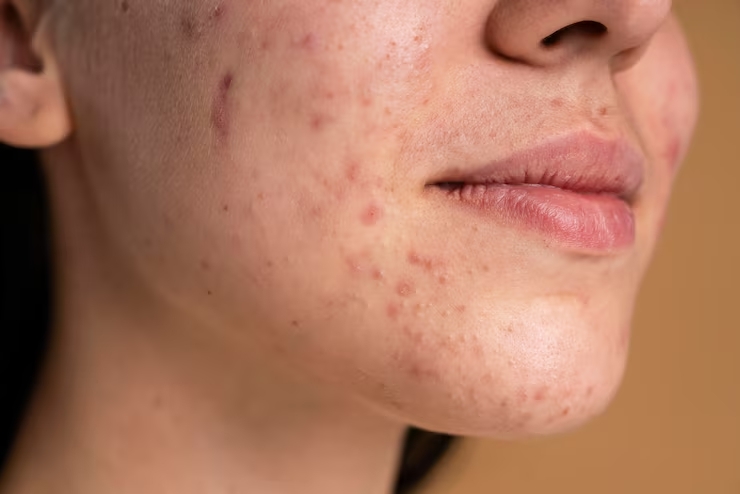
Why People Confuse Acne Marks and Acne Scars
After acne heals, the skin does not always return to normal immediately. A breakout may disappear, but something can remain behind: a brown spot, a red mark, a purple shadow, a small dent, or uneven texture. Most people call all of these “acne scars,” but that is not always accurate.
This confusion matters because acne marks and acne scars need different treatment approaches.
A dark spot after acne is usually not a true scar. It is often post-inflammatory hyperpigmentation, which means the skin has produced extra pigment after inflammation. A red or pink mark after acne may be post-inflammatory erythema, which is related to visible vascular changes after inflammation. These are flat marks, not structural scars.
A true acne scar is different. It changes the texture of the skin. It may appear as a dent, pit, depression, raised bump, or uneven surface. This happens when acne damages collagen in the deeper layers of the skin.
In simple terms:
Acne marks affect skin color. Acne scars affect skin texture.
This is the most important difference.
If the skin is flat but discolored, it is usually an acne mark. If the skin surface is indented, raised, or uneven, it is more likely to be a true acne scar.
What Are Acne Marks?
Acne marks are discolorations that remain after a breakout heals. They are usually flat and do not change the surface structure of the skin.
Acne marks can appear as:
Brown spots
Dark patches
Red marks
Pink marks
Purple marks
Uneven discoloration
Post-acne pigmentation
They are caused by inflammation. When a pimple becomes inflamed, the skin responds by activating healing processes. During this response, pigment production or redness may increase. Even after the pimple disappears, the discoloration can remain.
Acne marks are especially common in people who pick, squeeze, or irritate pimples. The more inflammation created during a breakout, the more likely a visible mark will remain.
The good news is that acne marks are usually temporary. They can fade over time, especially with the right skincare routine and daily sun protection.
However, they can take weeks or months to fade, depending on skin tone, inflammation level, UV exposure, and how consistent the routine is.
Types of Acne Marks
Acne marks are not all the same. The two most common types are post-inflammatory hyperpigmentation and post-inflammatory erythema.
Post-Inflammatory Hyperpigmentation
Post-inflammatory hyperpigmentation, often called PIH, appears as brown, tan, or dark spots after acne.
This happens when inflammation triggers the skin to produce more melanin. Melanin is the pigment responsible for skin color. When the skin produces too much melanin in one area, a dark mark forms.
PIH is more common in medium to deeper skin tones, but it can happen to anyone.
Common signs of post-inflammatory hyperpigmentation include:
Brown marks after acne
Dark spots where pimples healed
Flat discoloration
Marks that become darker after sun exposure
Spots that take weeks or months to fade
Post-inflammatory hyperpigmentation is not a scar because the skin texture remains flat. The issue is pigment, not collagen loss.
This means skincare can often help. Ingredients that support brightening, pigment balance, and skin renewal may improve the appearance of these marks over time.
Post-Inflammatory Erythema
Post-inflammatory erythema, often called PIE, appears as red, pink, or purple marks after acne.
This type of mark is more related to tiny blood vessels and inflammation rather than excess melanin. It is common in lighter skin tones but can appear in many skin types.
Common signs of post-inflammatory erythema include:
Red marks after acne
Pink spots where pimples healed
Purple discoloration
Flat marks
Redness that stays after inflammation decreases
PIE is also not a true scar because it does not usually change skin texture. It is a vascular or redness-related mark.
PIE can be more stubborn than people expect. Calming the skin, avoiding irritation, and protecting the skin from UV exposure are important.
Using aggressive exfoliation can make redness worse. This is why acne mark treatment should never focus only on acids or strong actives. The skin barrier must stay healthy.
What Are Acne Scars?
Acne scars are permanent or long-lasting changes in skin texture caused by deeper inflammation and collagen damage.
Unlike acne marks, acne scars are not just discoloration. They change the shape of the skin surface.
Acne scars may look like:
Small dents
Deep pits
Rolling depressions
Uneven texture
Raised bumps
Thickened scar tissue
Permanent surface irregularity
True acne scars form when inflammation damages the deeper layers of the skin. During healing, the skin may produce too little collagen or too much collagen.
If too little collagen is produced, an indented scar forms.
If too much collagen is produced, a raised scar forms.
This is why acne scars are more difficult to treat than acne marks. Skincare products can improve overall skin quality, but they usually cannot fully remove deep scars. Professional treatments may be needed for visible textural scars.
Types of Acne Scars
There are several types of acne scars. Understanding the type helps explain why some scars respond differently to treatment.
Atrophic Acne Scars
Atrophic scars are indented scars caused by collagen loss. They are the most common type of acne scar.
They appear as depressions in the skin because the skin did not produce enough collagen during healing.
There are three major types of atrophic acne scars:
Ice pick scars
Boxcar scars
Rolling scars
Ice Pick Scars
Ice pick scars are narrow, deep scars that look like tiny holes or punctures in the skin.
They are usually small but can be difficult to treat because they extend deeper into the skin.
They often form after severe inflammatory acne.
Skincare products alone usually cannot fully correct ice pick scars because the problem is structural and deep.
Boxcar Scars
Boxcar scars are wider depressions with sharper edges. They may look like small craters or angular indentations.
They are usually caused by collagen loss after inflamed acne.
Boxcar scars can vary in depth. Shallow ones may look softer over time with skin-renewing routines, but deeper ones often need professional treatment.
Rolling Scars
Rolling scars create a wavy or uneven appearance on the skin. They usually have softer edges and make the skin look uneven from different angles.
They are caused by fibrous tissue pulling the skin downward.
Rolling scars often need professional procedures because they involve deeper structural changes under the skin.
Hypertrophic and Keloid Acne Scars
Not all acne scars are indented. Some are raised.
Raised scars happen when the skin produces too much collagen during healing.
Hypertrophic scars are raised scars that stay within the original acne wound area.
Keloid scars grow beyond the original wound area and may become larger over time.
These scars are more common on areas like:
Chest
Back
Shoulders
Jawline
Raised scars are not treated the same way as dark spots or indented scars. They often require professional care.
Acne Marks vs Acne Scars: The Simple Test
A simple way to tell the difference is to look at the skin from the side or under natural light.
Ask yourself:
Is the skin surface flat?
If yes, it is probably an acne mark.
Is the skin dented, raised, or uneven?
If yes, it is probably an acne scar.
Another useful test is to gently stretch the skin.
If the discoloration remains but the texture looks smooth, it is likely an acne mark.
If the indentation or uneven texture remains even when the skin is stretched, it may be a scar.
This is not a medical diagnosis, but it helps you understand what kind of concern you are dealing with.
Why Acne Marks Form After Breakouts
Acne marks form because acne is an inflammatory process. When a pimple appears, the skin treats it like an injury. The immune system responds, blood flow increases, and pigment activity may change.
Several factors make acne marks more likely:
Picking pimples
Squeezing breakouts
Severe inflammation
Sun exposure
Darker skin tone
Harsh skincare
Over-exfoliation
Slow healing
Repeated breakouts in the same area
Picking is one of the biggest triggers. When you squeeze a pimple, you increase trauma inside the skin. This can make inflammation worse and increase the chance of both marks and scars.
Sun exposure is another major factor. UV rays can darken post-acne marks and make them last longer. This is why sunscreen is essential for acne-prone skin.
Why Acne Scars Form After Breakouts
Acne scars form when inflammation damages the deeper structure of the skin. This is more likely with severe or deep acne.
Common acne types that may lead to scars include:
Cystic acne
Nodular acne
Deep inflamed pimples
Long-lasting acne lesions
Acne that is picked or squeezed
Acne that heals slowly
When the inflammation reaches deeper layers, collagen can be destroyed. During healing, the skin may not rebuild the area evenly.
If collagen is lost, indented scars form.
If collagen is overproduced, raised scars form.
This is why early acne control is important. Preventing severe inflammation is one of the best ways to reduce the risk of future scarring.
Can Acne Marks Turn Into Scars?
Acne marks do not directly “turn into” scars, but the same breakout can leave both a mark and a scar.
For example, a deep inflamed pimple may heal and leave a brown spot plus a small indentation. The brown spot is the acne mark. The indentation is the acne scar.
This is why many people think their acne mark has become a scar. In reality, both may have formed at the same time.
If the area is flat and only discolored, it is an acne mark.
If the area has changed texture, it is a scar.
Can Acne Marks Fade Naturally?
Yes, acne marks can fade naturally, but the process can be slow.
The fading timeline depends on:
Skin tone
Depth of pigmentation
Sun exposure
Inflammation level
Skincare routine
Whether new breakouts continue
Skin barrier health
Some acne marks fade in a few weeks. Others take several months.
Dark marks usually last longer if sunscreen is skipped. Red marks may last longer if the skin stays irritated or inflamed.
A consistent brightening and protective routine can help the fading process.
Can Acne Scars Fade Naturally?
True acne scars usually do not fully disappear on their own.
The skin may look slightly smoother over time, but deep textural scars usually require professional treatments such as microneedling, laser treatments, chemical peels, subcision, or other dermatology procedures.
Skincare can support scar-prone skin by improving texture, hydration, brightness, and overall skin quality. But skincare should not be expected to fully remove deep scars.
This is why knowing the difference is important. If the problem is a dark mark, skincare may help significantly. If the problem is a deep scar, skincare can support the skin but may not be enough.
Best Ingredients for Acne Marks
Acne marks respond best to ingredients that support brightening, even tone, inflammation control, and sun protection.
Useful ingredient categories include:
Niacinamide
Azelaic acid
Tranexamic acid
Vitamin C
Retinol
Gentle exfoliating acids
Sunscreen
For post-acne discoloration and uneven tone, Maruderm Anti-Blemish Skin Brightening Serum can fit into a routine designed to support a clearer and more even-looking complexion.
For more targeted discoloration, Maruderm Tranexamic Acid Serum can be used in routines focused on stubborn dark spots and post-acne marks.
Best Ingredients for Acne Scars
Acne scars need a different strategy.
For true textural scars, skincare ingredients may support smoother-looking skin but usually cannot fully remove scars.
Helpful ingredient categories include:
Retinol
Peptides
Exfoliating acids
Hydrating ingredients
Sunscreen
Retinol may help improve the look of texture gradually by supporting skin renewal. Hydration can make skin look plumper and smoother. Sunscreen helps prevent discoloration around scars from becoming more visible.
However, deeper scars usually need professional treatment.
Why Sunscreen Is Essential for Both Marks and Scars
Sunscreen is one of the most important steps after acne.
For acne marks, sunscreen helps prevent dark spots from becoming darker.
For acne scars, sunscreen helps protect the skin and prevent uneven pigmentation around scarred areas.
UV exposure can make the skin look more uneven and slow visible improvement.
Using Maruderm SPF 50 Anti Blemish Sun Cream every morning can help protect blemish-prone skin and support a more even-looking complexion.
Without sunscreen, acne marks can last longer, and the overall skin tone may look less balanced.
The Biggest Mistake: Treating Scars Like Marks
Many people spend months applying brightening serums to indented acne scars and feel frustrated when the texture does not change.
This happens because brightening ingredients target discoloration, not deep collagen damage.
If your concern is flat discoloration, brightening skincare can help.
If your concern is dents or raised scars, skincare alone is usually limited.
The correct approach begins with identifying whether the issue is color or texture.
FAQ
1. What is the difference between acne marks and acne scars?
Acne marks are flat discolorations, while acne scars are textural changes such as dents, pits, or raised areas.
2. Are dark spots after acne scars?
Usually no. Dark spots after acne are often post-inflammatory hyperpigmentation, which is an acne mark, not a true scar.
3. Are red marks after acne scars?
Usually no. Red or pink marks are often post-inflammatory erythema, which is a flat acne mark.
4. How do I know if I have an acne scar?
If the skin is indented, raised, or uneven in texture, it is more likely to be an acne scar.
5. Can acne marks fade naturally?
Yes, acne marks can fade over time, but they may take weeks or months.
6. Can acne scars fade naturally?
True acne scars usually do not fully disappear naturally, especially if they are deep or textured.
7. What causes acne marks?
Acne marks are caused by inflammation, pigment changes, redness, picking, and sun exposure.
8. What causes acne scars?
Acne scars form when deeper inflammation damages collagen during healing.
9. Can skincare treat acne marks?
Yes, skincare can often help improve acne marks with consistent brightening ingredients and sunscreen.
10. Can skincare remove acne scars?
Skincare can improve overall texture and skin quality, but deep acne scars usually need professional treatment.
How to Treat Acne Marks: The Right Skincare Approach
Treating acne marks starts with understanding that discoloration is not the same as skin damage. If the skin is flat but has a brown, red, purple, or pink mark, the main concern is usually pigment or redness. This means the treatment strategy should focus on calming inflammation, supporting an even skin tone, protecting the skin from UV exposure, and preventing new breakouts from leaving new marks.
The biggest mistake people make when treating acne marks is trying to fade them too aggressively. They use multiple brightening serums, strong exfoliating acids, retinol, scrubs, and masks all at once. Instead of fading faster, the marks often become darker or more irritated because the skin barrier becomes damaged.
Acne marks fade best when the skin is calm, protected, and consistent.
A good routine should focus on four goals:
Reduce visible discoloration
Calm inflammation
Support the skin barrier
Prevent new acne marks
Protect the skin every morning
The routine does not need to be complicated. In fact, a simple routine usually works better because it is easier to follow and less likely to irritate the skin.
Step 1: Stop New Breakouts First
Before focusing only on old acne marks, it is important to control new breakouts. If acne continues, new marks will continue forming. This makes the skin look like it is not improving, even if older marks are slowly fading.
For example, if one dark spot fades but two new pimples leave two new spots, the overall skin tone will still look uneven.
This is why acne mark treatment should always include acne prevention.
To reduce new marks, focus on:
Gentle cleansing
Avoiding pore-clogging products
Not picking pimples
Using acne-supporting ingredients if needed
Keeping the skin barrier healthy
Wearing sunscreen daily
The goal is not only to fade existing marks but also to reduce the chance of new marks forming.
Step 2: Use Brightening Ingredients Consistently
Brightening ingredients can help improve the appearance of acne marks over time. They work by supporting more even-looking tone, reducing the appearance of dark spots, and helping the skin recover from post-inflammatory discoloration.
Useful ingredients for acne marks include:
Tranexamic acid
Niacinamide
Azelaic acid
Vitamin C
Retinol
Gentle exfoliating acids
However, more ingredients do not always mean better results. A routine with too many actives can irritate the skin and make discoloration more persistent.
For post-acne marks and uneven skin tone, Maruderm Anti-Blemish Skin Brightening Serum can be used as a targeted brightening step. It fits well into routines focused on blemish-prone skin, uneven tone, and post-acne discoloration.
For stubborn dark spots, Maruderm Tranexamic Acid Serum can be used as a more targeted pigmentation-support step. Tranexamic acid is especially useful when marks are slow to fade or when discoloration keeps returning.
Step 3: Protect the Skin with Sunscreen Every Morning
Sunscreen is the most important step in treating acne marks.
Even if you use the best brightening ingredients, dark marks can remain stubborn if the skin is exposed to UV radiation without protection. Sun exposure can darken post-acne marks, trigger more melanin production, and make discoloration last longer.
This is why sunscreen is not optional.
For acne-prone and blemish-prone skin, Maruderm SPF 50 Anti Blemish Sun Cream can be used every morning as the final step of the skincare routine.
Daily sunscreen helps:
Prevent acne marks from darkening
Protect healing skin
Support a more even-looking complexion
Maintain brightening results
Reduce UV-related inflammation
If you are treating acne marks without sunscreen, your routine is incomplete.
Step 4: Avoid Picking and Squeezing
Picking is one of the fastest ways to turn a small pimple into a long-lasting mark.
When you squeeze a breakout, you increase inflammation inside the skin. This can damage surrounding tissue and trigger more pigment production. Even if the pimple looks smaller temporarily, the mark left behind can last much longer.
Picking can also increase the risk of true acne scars because deeper inflammation can damage collagen.
To prevent acne marks and scars:
Do not squeeze pimples
Avoid scratching healing acne
Do not peel scabs
Use spot care instead of physical pressure
Keep hands away from the face
Let pimples heal naturally
The less trauma the skin experiences, the lower the chance of long-lasting discoloration.
Step 5: Keep the Skin Barrier Healthy
A damaged skin barrier makes acne marks harder to treat.
When the barrier is weak, the skin becomes more reactive. Reactive skin becomes inflamed more easily. Inflammation can trigger more pigmentation and make existing marks look worse.
Signs of a damaged barrier include:
Burning
Stinging
Tightness
Peeling
Redness
Sudden sensitivity
Skin feeling dry and oily at the same time
If these symptoms appear, reduce active ingredients and focus on recovery. Brightening ingredients work better when the skin is stable.
A strong barrier helps the skin tolerate treatments more consistently, which leads to better long-term results.
How to Treat Post-Inflammatory Hyperpigmentation
Post-inflammatory hyperpigmentation appears as brown or dark spots after acne. This type of acne mark is caused by excess melanin production after inflammation.
The best strategy is to combine pigment-supporting ingredients with strict sun protection.
A simple routine for post-inflammatory hyperpigmentation may include:
Morning:
Cleanser
Brightening serum
Sunscreen
Evening:
Cleanser
Targeted dark spot serum
Moisturizer if needed
For example, Maruderm Anti-Blemish Skin Brightening Serum can be used to support a more even-looking complexion, while Maruderm SPF 50 Anti Blemish Sun Cream helps prevent dark marks from becoming darker during the day.
If the pigmentation is stubborn, Maruderm Tranexamic Acid Serum can be used in the evening as a targeted discoloration step.
The key is patience. Brown acne marks usually fade slowly. Visible improvement may take several weeks or months depending on the depth of discoloration and consistency of sunscreen use.
How to Treat Post-Inflammatory Erythema
Post-inflammatory erythema appears as red, pink, or purple marks after acne. This type of mark is related more to redness and vascular changes than melanin.
Because redness is easily worsened by irritation, the routine should be gentle.
Avoid using too many strong acids or harsh exfoliating products. Over-treatment can make red marks look more intense.
A routine for red acne marks should focus on:
Calming the skin
Avoiding irritation
Supporting the barrier
Using sunscreen daily
Preventing new inflamed acne
Red marks often improve gradually as the skin calms down. If redness is persistent, professional treatments may be needed, but a gentle routine is still the foundation.
How to Treat Acne Scars: What Skincare Can and Cannot Do
Acne scars are different from acne marks because they involve changes in skin structure. This means skincare has limitations.
If the scar is indented or raised, a brightening serum alone will not fully remove it. Brightening ingredients target discoloration, not collagen loss or raised scar tissue.
Skincare can still help by improving:
Overall skin texture
Hydration
Surface smoothness
Tone around scars
Skin quality
Appearance of mild roughness
But deeper scars usually need professional procedures.
True acne scars may require treatments such as:
Microneedling
Laser treatments
Chemical peels
Subcision
Professional resurfacing
Dermatologist-guided scar treatments
This does not mean skincare is useless for scars. It means expectations must be realistic.
A good skincare routine can make the skin look healthier and more even, but it may not erase deep structural scars.
Why Acne Scars Need Collagen Support
Indented acne scars happen when the skin loses collagen after deep inflammation. Collagen is the structural protein that keeps the skin firm and smooth.
When collagen is damaged, the skin may heal with a depression or pit. This is why scars are harder to treat than marks.
Ingredients that support renewal and skin quality may help improve the appearance of mild texture over time, but they cannot rebuild deep scars in the same way professional treatments can.
For scar-prone skin, the routine should focus on:
Preventing new acne
Avoiding picking
Supporting skin renewal
Maintaining hydration
Protecting from UV exposure
Seeking professional care for deep scars
The best scar treatment is prevention. Controlling inflammatory acne early reduces the chance of permanent textural damage.
Acne Marks Routine vs Acne Scars Routine
Because acne marks and acne scars are different, their routines should also be different.
Routine for Acne Marks
Goal: Fade discoloration and prevent new marks.
Morning:
Cleanser
Maruderm Anti-Blemish Skin Brightening Serum
Maruderm SPF 50 Anti Blemish Sun Cream
Evening:
Cleanser
Maruderm Tranexamic Acid Serum
Moisturizer if needed
This routine focuses on tone correction and prevention.
Routine for Acne Scars
Goal: Support skin texture and prevent deeper damage.
Morning:
Cleanser
Hydration if needed
Sunscreen
Evening:
Cleanser
Skin-renewing ingredient if tolerated
Moisturizer if needed
For true scars, professional treatments may be needed. Skincare supports skin quality but does not replace dermatological scar revision.
Can You Treat Acne Marks and Acne Scars at the Same Time?
Yes, but the routine should be realistic.
Many people have both acne marks and scars. For example, the skin may have brown spots plus small dents from older breakouts. In this case, skincare can help fade discoloration, while professional treatments may be needed for deeper texture.
A combined strategy may look like this:
Brightening ingredients for flat marks
Sunscreen to prevent discoloration
Barrier support to reduce irritation
Acne control to prevent new damage
Dermatology procedures for deeper scars
Trying to fix everything with strong skincare products alone can lead to irritation. A balanced approach works better.
How Long Does It Take to Fade Acne Marks?
Acne marks take time.
A realistic timeline:
Weeks 1–2: Skin begins adjusting to the routine
Weeks 3–4: Redness or dullness may look slightly calmer
Weeks 6–8: Some marks may start appearing lighter
Weeks 8–12: More visible improvement in tone
3–6 months: Stubborn marks may continue fading
Dark marks usually take longer than redness. Deeper pigmentation takes longer than surface discoloration.
Sun exposure can slow progress significantly.
If you are consistent with brightening ingredients and sunscreen, acne marks can gradually become less visible.
How Long Does It Take to Improve Acne Scars?
Acne scars improve more slowly than acne marks.
Mild texture may look better over time with good skincare, hydration, and renewal-supporting ingredients. However, deeper scars usually do not disappear fully with topical products.
Professional treatments often require multiple sessions and several months for visible improvement because collagen remodeling takes time.
A realistic expectation is:
Skincare can improve overall skin quality
Professional treatments can improve deeper texture
Complete scar removal is not always possible
Prevention is easier than correction
This is why treating active acne early is important.
Best Ingredients for Acne Marks
The most useful ingredients for acne marks are those that support brightening, pigment balance, and inflammation control.
Tranexamic Acid
Tranexamic acid is useful for stubborn discoloration and dark spots. It supports a more even-looking skin tone and works well in routines for post-acne marks.
Maruderm Tranexamic Acid Serum can be used as a targeted evening step for dark marks and uneven tone.
Niacinamide
Niacinamide supports oil balance, barrier function, and uneven tone. It is especially useful for acne-prone skin because it helps address several concerns at once.
It can help reduce the appearance of post-acne unevenness while supporting a healthier skin barrier.
Azelaic Acid
Azelaic acid is useful when acne marks appear with redness, inflammation, or acne-prone sensitivity. It supports a clearer-looking complexion and helps improve uneven tone over time.
Vitamin C
Vitamin C helps with dullness, radiance, and antioxidant protection. It can be useful for acne marks when the skin is stable and not overly sensitive.
Retinol
Retinol supports skin renewal and can help improve texture and uneven tone gradually. However, it should be introduced carefully because irritation can worsen acne marks.
Sunscreen
Sunscreen is essential. Without it, dark spots can return or become darker.
For acne-prone skin, Maruderm SPF 50 Anti Blemish Sun Cream is a suitable protective step for blemish-prone and uneven-looking skin.
Best Ingredients for Acne Scars
Acne scars need ingredients that support skin renewal and overall texture.
Helpful categories include:
Retinol
Peptides
Hydrating ingredients
Gentle exfoliating acids
Sunscreen
However, these ingredients are supportive. They do not fully erase deep scars.
For deep scars, professional procedures are usually more effective.
Why Exfoliation Must Be Used Carefully
Exfoliation can help with dullness and surface texture, but too much exfoliation can damage the barrier.
Over-exfoliation may cause:
Redness
Burning
Peeling
More breakouts
Increased pigmentation
Slower healing
If you have acne marks, irritation can make them darker or more persistent. If you have acne scars, irritation can make the surrounding skin look uneven and inflamed.
Use exfoliation slowly and only as tolerated.
Why Moisture Matters for Acne Marks and Scars
Hydration does not directly erase acne marks or scars, but it improves the way skin looks and heals.
Hydrated skin appears:
Smoother
Plumper
Less dull
Less irritated
More even
When the skin is dehydrated, marks can look more obvious and texture can appear rougher.
A balanced routine should not focus only on active ingredients. Moisture and barrier support are essential for long-term skin improvement.
Why Sunscreen Is the Non-Negotiable Step
Sunscreen is the step that protects progress.
Without sunscreen:
Dark marks can get darker
Red marks may look more intense
Uneven tone can return
Skin can become more inflamed
Brightening results become slower
This is especially important if you use exfoliating acids, retinol, vitamin C, or brightening serums.
Use sunscreen every morning, even when you are not spending the whole day outside.
Common Mistakes When Treating Acne Marks
1. Skipping Sunscreen
This is the most common reason acne marks do not fade properly.
2. Using Too Many Brightening Products
Too many actives can irritate the skin and worsen discoloration.
3. Picking Pimples
Picking increases inflammation and makes marks more likely.
4. Expecting Results Too Quickly
Acne marks take weeks or months to fade.
5. Ignoring New Acne
If new acne continues, new marks will continue forming.
Common Mistakes When Treating Acne Scars
1. Using Brightening Serums on Deep Scars
Brightening serums help discoloration, not deep dents.
2. Expecting Topicals to Remove Scars Completely
Topical skincare has limits for true scars.
3. Delaying Treatment for Severe Acne
The longer severe acne continues, the higher the scar risk.
4. Scrubbing the Skin
Scrubbing does not remove scars and may irritate the skin.
5. Not Seeking Professional Help
Deep scars often require professional procedures.
FAQ
1. What is the best treatment for acne marks?
A routine with brightening ingredients, sunscreen, acne prevention, and barrier support is usually best.
2. What is the best treatment for acne scars?
True acne scars often require professional treatments such as microneedling, laser, peels, or subcision.
3. Can brightening serum remove acne scars?
Brightening serum can help discoloration, but it cannot fully remove deep textural scars.
4. Can sunscreen fade acne marks?
Sunscreen does not directly fade marks, but it prevents them from darkening and helps treatment work better.
5. Why are my acne marks not fading?
Common reasons include sun exposure, ongoing acne, picking, irritation, and inconsistent routine.
6. Can acne scars improve with skincare?
Mild texture may look better, but deeper scars usually need professional treatment.
7. Should I exfoliate acne marks?
Gentle exfoliation may help, but over-exfoliation can make marks worse.
8. Can retinol help acne marks and scars?
Retinol may help skin renewal and texture, but it should be introduced slowly to avoid irritation.
9. How long do acne marks take to fade?
Many acne marks take 8–12 weeks or longer, depending on depth and sun protection.
10. How long do acne scars take to improve?
Acne scars often take months to improve and usually require professional treatments for visible texture changes.
Long-Term Strategy: How to Prevent Acne Marks and Acne Scars
Treating acne marks and acne scars is important, but prevention is even more important. Once the skin has developed discoloration or texture damage, improvement takes time. This is why the best strategy is not only to correct what is already visible, but also to stop new marks and scars from forming.
Most people focus only on the spot that is already there. They look for a serum to fade the mark, a cream to smooth the scar, or a quick solution to even the skin. But if new breakouts continue, the cycle continues. One pimple fades, another appears, and another mark forms.
This creates the feeling that nothing is working.
A proper long-term strategy should focus on five goals:
Control active acne
Reduce inflammation
Avoid picking or squeezing
Protect the skin from UV exposure
Support healing with a consistent routine
Acne marks and acne scars do not happen randomly. They usually form when inflammation is strong, healing is disrupted, or the skin is repeatedly irritated. The more controlled your acne routine is, the lower your risk of long-lasting marks and scars.
Why Prevention Matters More Than Correction
Once a dark mark forms, it can take weeks or months to fade. Once a true acne scar forms, it may not fully disappear without professional treatment. This is why prevention is always easier than correction.
Preventing acne marks means reducing the inflammation that triggers pigmentation.
Preventing acne scars means reducing deep skin damage and collagen disruption.
Both require a calm, consistent routine.
If your skin is constantly inflamed, over-exfoliated, dry, or irritated, marks and scars are more likely to appear. If your skin is protected, balanced, and treated early, the risk is lower.
This is why skincare should not be aggressive. Strong routines can sometimes make the skin look worse if they weaken the barrier or trigger more irritation.
The best acne routine is not the harshest routine. It is the one that controls breakouts while keeping the skin healthy enough to heal properly.
Why New Acne Must Be Controlled First
If acne is still active, new marks will continue forming. This is the main reason many people feel stuck.
They may use brightening products every day, but if new breakouts appear every week, the skin never gets a chance to fully clear. The complexion continues to look uneven because old marks are fading while new ones are forming.
To prevent this cycle, acne control must come before advanced mark treatment.
This does not mean using every acne product at once. It means building a routine that reduces breakouts without damaging the skin barrier.
A good acne-prevention routine should include:
Gentle cleansing
Non-heavy product textures
Consistent sunscreen
Targeted acne or pore support if needed
Hydration when the skin feels dry or tight
Avoiding physical pressure on pimples
If active acne is moderate, severe, painful, cystic, or persistent, professional support may be needed. Skincare can support the skin, but deep or recurring acne should not be ignored because it carries a higher risk of scarring.
How to Prevent Acne Marks
Acne marks form when inflammation leaves discoloration behind. The key is to reduce inflammation quickly and protect the skin while it heals.
1. Do Not Pick Pimples
Picking is one of the strongest triggers for acne marks.
When you squeeze a pimple, you are not only pushing material out. You may also push inflammation deeper into the skin. This increases the chance of redness, dark marks, and scarring.
Even if picking makes the pimple look flatter temporarily, the long-term result can be worse.
To reduce picking:
Keep hands away from the face
Avoid checking pimples repeatedly in mirrors
Use spot care instead of squeezing
Do not peel scabs
Avoid touching healing acne
Keep nails short if you tend to pick
The less trauma the skin experiences, the faster and cleaner it can heal.
2. Use Brightening Ingredients Consistently
Brightening ingredients help support a more even-looking tone over time. They are especially useful for flat acne marks such as brown spots and uneven discoloration.
For acne marks, consistency matters more than strength.
A product like Maruderm Anti-Blemish Skin Brightening Serum can be used in routines focused on post-acne discoloration and uneven tone. It fits best when the concern is flat marks rather than deep scars.
For stubborn discoloration, Maruderm Tranexamic Acid Serum can be used as a targeted step for dark spots that fade slowly.
The key is not to use every brightening product at once. Choose a focused routine and allow enough time for results.
3. Use Sunscreen Every Morning
Sunscreen is essential for acne marks.
Dark marks become darker when exposed to UV radiation. Red marks may also look more intense when the skin is irritated by sun exposure.
If you use brightening ingredients but skip sunscreen, results will be slower and less stable.
Maruderm SPF 50 Anti Blemish Sun Cream can be used every morning as the final step of a routine for blemish-prone and uneven-looking skin.
Sunscreen helps:
Prevent acne marks from darkening
Protect healing skin
Support brightening routines
Reduce UV-related irritation
Maintain a more even-looking complexion
No acne mark routine is complete without daily sun protection.
How to Prevent Acne Scars
Acne scars are harder to correct than acne marks because they involve texture and collagen damage. Prevention is especially important for scars.
1. Treat Deep Acne Early
Deep acne has a higher risk of scarring. This includes cystic acne, nodular acne, and painful inflamed pimples under the skin.
If breakouts are deep, recurring, or painful, do not rely only on surface skincare for months. Early treatment can reduce the risk of permanent texture changes.
The deeper and longer the inflammation lasts, the more likely collagen damage becomes.
2. Avoid Squeezing Deep Pimples
Deep pimples should never be squeezed. They are often not close enough to the surface to extract safely.
Trying to force them out can rupture the follicle wall and increase inflammation underneath the skin. This can increase the risk of both scars and marks.
If a pimple is painful and deep, leave it alone and focus on calming the skin.
3. Keep the Skin Barrier Strong
A healthy barrier helps the skin heal more efficiently. A damaged barrier can slow healing and increase irritation.
Barrier damage can happen from:
Over-exfoliation
Harsh cleansers
Too many active ingredients
Scrubbing
Skipping moisturizer when the skin is dry
Using strong products too frequently
If the skin feels tight, burning, peeling, or raw, reduce active ingredients and focus on barrier repair.
A strong barrier does not remove scars, but it creates better conditions for healing and helps prevent new irritation.
4. Use Sunscreen to Protect Healing Skin
Sunscreen is also important for acne scars because UV exposure can make the surrounding skin tone more uneven. Scars may appear more noticeable when pigmentation develops around them.
Daily sunscreen helps protect healing skin and maintain a more balanced appearance.
Long-Term Routine for Acne Marks
A routine for acne marks should focus on brightening, calming, and protection.
Morning Routine
Cleanser
Maruderm Anti-Blemish Skin Brightening Serum
Maruderm SPF 50 Anti Blemish Sun Cream
Evening Routine
Cleanser
Maruderm Tranexamic Acid Serum
Moisturizer if needed
This routine focuses on flat discoloration, post-acne marks, and uneven tone.
If the skin becomes irritated, reduce the frequency of brightening serums and focus on hydration and sunscreen.
Long-Term Routine for Acne Scars
A routine for acne scars should focus on skin quality, texture support, hydration, and professional treatment when needed.
Morning Routine
Cleanser
Hydration if needed
Maruderm SPF 50 Anti Blemish Sun Cream
Evening Routine
Cleanser
Skin-renewing treatment if tolerated
Moisturizer if needed
For true scars, skincare can help the surrounding skin look healthier, smoother, and more even. But deep scars usually need professional procedures for meaningful texture improvement.
What to Expect from Acne Mark Treatment
Acne marks fade gradually. There is no overnight solution.
A realistic timeline looks like this:
Weeks 1–2: Skin begins adjusting to the routine
Weeks 3–4: Redness or dullness may look calmer
Weeks 6–8: Some marks may begin to fade
Weeks 8–12: Tone may look more even
3–6 months: Stubborn marks may continue improving
The timeline depends on skin tone, mark depth, sun exposure, acne activity, and consistency.
If new acne continues, results will look slower because new marks are being created while old marks fade.
What to Expect from Acne Scar Treatment
Acne scars improve much more slowly than acne marks.
Topical skincare may improve the look of mild texture, but deep scars usually require professional procedures. Even with professional treatment, scar improvement takes time because collagen remodeling is gradual.
A realistic view:
Mild texture may look smoother with consistent skincare
Deep scars usually need dermatological procedures
Multiple treatment sessions may be required
Complete removal is not always possible
Prevention is easier than correction
This is why early acne control is so important.
Why Some Acne Marks Do Not Fade
If acne marks are not fading, one or more of these factors may be involved.
1. Sunscreen Is Missing
Without sunscreen, pigmentation can become darker and last longer.
This is the most common reason dark marks stay visible.
2. New Acne Keeps Forming
If new breakouts keep appearing, new marks keep forming. The skin never gets a full recovery period.
3. The Skin Is Irritated
Irritation can trigger more discoloration. If the routine is too harsh, brightening results may slow down.
4. Products Are Being Changed Too Often
Brightening ingredients need time. Switching products every few days prevents results from developing.
5. The Mark Is Actually a Scar
If the concern is texture rather than color, brightening serums will not fully correct it.
Why Some Acne Scars Do Not Improve with Skincare
Acne scars are structural. If the skin is dented or raised, the issue is not only pigment.
Skincare cannot fully replace lost collagen or flatten raised scar tissue.
This is why some people use brightening products for months and feel disappointed. The product may be working on tone, but the scar is a texture issue.
If the concern is:
Pits
Dents
Deep depressions
Raised scar tissue
Wavy texture
professional treatment may be necessary.
Best Habits to Prevent Acne Marks and Scars
Daily habits can make a major difference.
1. Treat Acne Early
Do not wait until acne becomes severe. Early control reduces inflammation and lowers the risk of marks and scars.
2. Avoid Picking
Picking is one of the biggest causes of long-lasting marks and scars.
3. Use Sunscreen Daily
UV exposure makes acne marks worse and can make the complexion look uneven.
4. Keep the Routine Simple
Too many products can irritate the skin. A simple, consistent routine is usually more effective.
5. Support the Skin Barrier
Healthy skin heals better. Do not sacrifice barrier health for fast results.
6. Be Patient
Both acne marks and scars take time. Rushing usually leads to irritation.
Acne Marks vs Acne Scars: Which One Do You Have?
Use this simple guide:
You Likely Have Acne Marks If:
The skin is flat
The concern is brown, red, pink, or purple
Texture feels normal
The spot appeared after a pimple
It gets darker with sun exposure
It gradually fades over time
You Likely Have Acne Scars If:
The skin is indented
The surface is raised
There are pits or dents
Texture looks uneven from side lighting
The mark does not fade like discoloration
The skin structure has changed
Can You Have Both at the Same Time?
Yes, many people have both acne marks and acne scars.
For example, one old breakout may leave a brown mark and a small dent. The brown mark can fade with skincare, but the dent may remain.
This is why progress can look uneven. The discoloration may improve, but the texture may still be visible.
A combined plan may include:
Brightening skincare for marks
Sunscreen for protection
Acne control to prevent new damage
Professional treatments for scars
Barrier support to reduce irritation
This approach is more realistic than expecting one product to solve every post-acne concern.
When to See a Dermatologist
Professional guidance is helpful when:
Acne is painful or cystic
Scars are forming
Marks are not fading after months
Texture is indented or raised
Acne keeps returning
You are unsure whether it is a mark or scar
Over-the-counter skincare causes irritation
You have keloid-prone skin
Dark spots are worsening despite sunscreen
Dermatologists can identify whether the concern is pigmentation, redness, scarring, or a combination. This helps prevent wasted time and incorrect treatment.
The Biggest Myths About Acne Marks and Acne Scars
Myth 1: All Post-Acne Spots Are Scars
Not true. Many post-acne spots are flat marks, not scars.
Myth 2: Brightening Serums Can Remove Deep Scars
Brightening serums can help discoloration, but they cannot fully remove deep indentations.
Myth 3: Scrubbing Removes Acne Marks Faster
Scrubbing can irritate the skin and make marks worse.
Myth 4: Sunscreen Is Optional
Sunscreen is essential. Without it, acne marks can darken and last longer.
Myth 5: Acne Scars Always Disappear Naturally
Some scars may soften slightly, but true scars often need professional treatment.
Final Comparison: Acne Marks vs Acne Scars
Acne marks are flat discolorations. They may be brown, red, pink, or purple. They are caused by inflammation, pigment changes, or redness after acne. They can often improve with skincare and sunscreen.
Acne scars are textural changes. They may be indented, raised, pitted, or uneven. They are caused by collagen damage during deeper inflammation. They usually require professional treatments for significant improvement.
The easiest way to remember the difference:
Acne marks change the color of the skin. Acne scars change the texture of the skin.
Once you understand this difference, choosing the right routine becomes much easier.
Final Perspective: Treat the Right Problem
Acne marks and acne scars are often discussed together, but they should not be treated the same way.
If your skin is flat but discolored, focus on brightening ingredients, acne prevention, sunscreen, and patience.
If your skin is indented or raised, focus on preventing new scars, supporting skin quality, and considering professional treatments.
The best routine is not the most aggressive routine. It is the routine that matches the actual concern.
For acne marks, Maruderm Anti-Blemish Skin Brightening Serum, Maruderm Tranexamic Acid Serum, and Maruderm SPF 50 Anti Blemish Sun Cream can support a routine focused on uneven tone, discoloration, and daily protection.
For acne scars, skincare can support overall skin quality, but professional treatments may be needed for deeper texture improvement.
Clearer skin does not come from treating every post-acne concern the same way. It comes from knowing what you are seeing and choosing the right strategy.
FAQ (Part 3)
1. How can I tell if it is an acne mark or acne scar?
If the skin is flat and only discolored, it is likely an acne mark. If the skin is indented, raised, or textured, it is likely an acne scar.
2. Can acne marks go away completely?
Many acne marks can fade significantly over time with consistent skincare and sunscreen.
3. Can acne scars go away completely?
Deep acne scars usually do not disappear completely with skincare alone and may need professional treatments.
4. What is the best product for acne marks?
Brightening products such as Maruderm Anti-Blemish Skin Brightening Serum or Maruderm Tranexamic Acid Serum can help support uneven tone routines.
5. What is the best product for acne scars?
Topical products can support skin quality, but deep scars usually require professional treatments.
6. Does sunscreen help acne marks?
Yes, sunscreen helps prevent acne marks from darkening and supports fading over time.
7. Does sunscreen help acne scars?
Sunscreen protects the skin and prevents uneven pigmentation around scars, but it does not remove deep texture.
8. Why do acne marks keep coming back?
They return when new acne forms, inflammation continues, sunscreen is skipped, or the skin is irritated.
9. Why do acne scars form?
Acne scars form when deep inflammation damages collagen during the healing process.
10. What is the best long-term strategy?
Control acne early, avoid picking, use sunscreen daily, support the skin barrier, and treat marks or scars according to whether the problem is color or texture.