
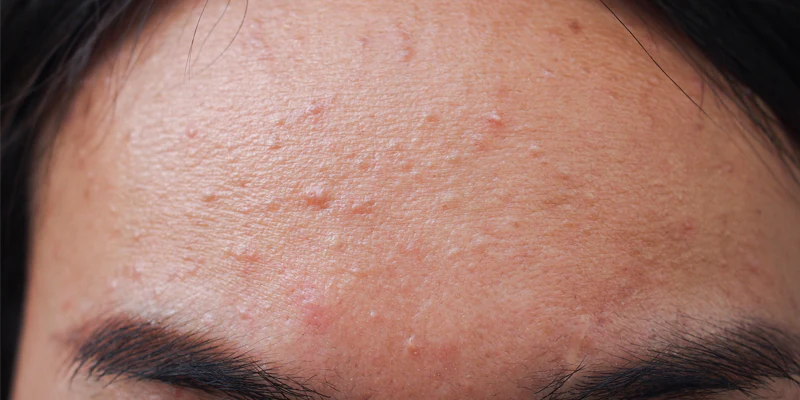
Why This Topic Matters
Many people think every breakout is acne. If small bumps appear on the forehead, cheeks, chest, shoulders, or back, the first instinct is usually to use acne products: salicylic acid, benzoyl peroxide, retinol, clay masks, exfoliating toners, or oil-control cleansers.
Sometimes this works.
But sometimes the bumps do not improve at all. They may even become itchier, more irritated, or more widespread. This is when people start asking: “Is this actually acne?”
That question matters because fungal acne and regular acne are not the same condition.
Fungal acne is not technically acne. It is commonly used as a casual name for Malassezia folliculitis, a follicle-related condition caused by yeast overgrowth. Regular acne, also called acne vulgaris, is caused by clogged pores, excess sebum, dead skin cell buildup, bacterial activity, and inflammation. Cleveland Clinic explains that fungal acne is a Malassezia yeast infection in hair follicles, while common acne happens when follicles become blocked with bacteria, oil, and dead skin.
This difference is extremely important because using the wrong treatment can delay results. A routine designed for regular acne may not solve fungal acne. A routine designed for fungal acne may not properly treat blackheads, closed comedones, or hormonal breakouts.
The goal is not to diagnose yourself perfectly from one article. The goal is to understand the signs, recognize the patterns, and know when your skin may need a different approach.
What Is Fungal Acne?
Fungal acne is the common name for Malassezia folliculitis, sometimes also called Pityrosporum folliculitis. It happens when Malassezia yeast, which naturally exists on the skin, overgrows inside hair follicles and causes acne-like bumps.
The key point is this:
Fungal acne is not caused by clogged pores in the same way regular acne is.
It is more closely related to folliculitis, which means inflammation of the hair follicle. The bumps can look like acne, but the underlying cause is different.
Fungal acne often appears as clusters of small bumps that look very similar in size and shape. These bumps may be itchy, rash-like, or appear suddenly after sweating, heat, humidity, antibiotic use, or occlusive clothing. Cleveland Clinic notes that fungal acne can cause clusters of small, itchy red bumps and may also produce pustules.
This is why fungal acne is often misidentified as regular acne. It can look like pimples, but it does not behave exactly like acne vulgaris.
What Is Regular Acne?
Regular acne, also known as acne vulgaris, is a common skin condition caused by a combination of clogged pores, excess sebum, dead skin cells, bacteria, and inflammation.
Regular acne can appear in different forms:
Blackheads
Whiteheads
Closed comedones
Papules
Pustules
Nodules
Cysts
Unlike fungal acne, regular acne often has more variety. You may see clogged pores, inflamed pimples, under-the-skin bumps, and painful lesions at the same time.
Regular acne is strongly connected to:
Sebum production
Hormones
Pore blockage
Skin cell turnover
Bacterial activity
Inflammation
Comedone formation
This is why ingredients like salicylic acid, retinol, benzoyl peroxide, azelaic acid, and niacinamide are often used in acne-prone skincare routines. These ingredients target oil, clogged pores, inflammation, or skin renewal.
For regular acne-prone skin, Maruderm Purifying Face Cleansing Gel For Normal to Oily Skin can be used as a daily cleanser because it is designed to remove excess oil, support pore cleansing, and help maintain clearer-looking skin. The official product page describes it as a lightweight cleansing gel for normal to oily skin, enriched with salicylic acid and soothing ingredients to help remove excess sebum and daily buildup without excessive dryness.
Fungal Acne vs Regular Acne: The Core Difference
The simplest difference is this:
Fungal acne is usually yeast-related folliculitis. Regular acne is usually pore blockage plus inflammation.
Fungal acne develops when Malassezia yeast overgrows inside hair follicles.
Regular acne develops when pores become clogged with sebum and dead skin cells, then become inflamed.
Because the causes are different, the symptoms and treatment response are also different.
How Fungal Acne Looks
Fungal acne often has a very specific appearance.
It may look like:
Small red bumps
Tiny pustules
Uniform bumps that look similar to each other
Clusters of bumps
Itchy breakouts
Rash-like acne
Bumps on the forehead, chest, shoulders, upper back, neck, or arms
A major clue is uniformity. Fungal acne bumps often look very similar in size and shape. Regular acne usually looks more mixed, with blackheads, whiteheads, inflamed pimples, and sometimes deeper lesions.
Cleveland Clinic notes that fungal acne can cause sudden clusters of small pimples that look similar in size and appearance, and that the skin may feel itchy, burning, or painful.
How Regular Acne Looks
Regular acne usually has more variation.
It may include:
Blackheads
Whiteheads
Closed comedones
Red pimples
Pus-filled pimples
Painful cysts
Inflamed bumps
Post-acne marks
Regular acne may appear on the face, chest, shoulders, and back, but facial acne is especially common around the T-zone, cheeks, jawline, and chin.
If your breakouts include blackheads and whiteheads, regular acne is more likely than fungal acne. Fungal acne usually does not produce the classic comedones that are common in acne vulgaris.
Key Sign #1: Itching
Itching is one of the biggest clues that a breakout may be fungal acne.
Regular acne can sometimes feel irritated or tender, but it is not usually strongly itchy. Fungal acne, on the other hand, is often itchy or rash-like.
Cleveland Clinic specifically notes that the main difference is that fungal acne can be itchy, while acne vulgaris usually is not.
If your bumps are small, uniform, and itchy, especially on the forehead, chest, shoulders, or back, fungal acne becomes more likely.
However, itching alone does not confirm fungal acne. Irritated skin, allergic reactions, eczema, folliculitis, and over-exfoliation can also cause itching. If the breakout is persistent or confusing, a dermatologist should evaluate it.
Key Sign #2: Uniform Bumps
Fungal acne tends to look very uniform.
This means the bumps often appear:
Similar in size
Similar in color
Similar in shape
Grouped closely together
Rash-like
Regular acne is usually more mixed. You may see one large inflamed pimple, a few whiteheads, some blackheads, and closed comedones at the same time.
Uniform bumps are not always fungal acne, but they are a strong clue.
If your breakout looks like many tiny bumps that all appeared around the same time, especially after sweating or heat, fungal acne may be worth considering.
Key Sign #3: Location
Location can help you understand the difference.
Fungal acne commonly appears on areas where sweat, heat, and oil accumulate.
Common fungal acne areas include:
Forehead
Chest
Shoulders
Upper back
Neck
Upper arms
Chin
Cleveland Clinic lists the chin, chest, forehead, neck, upper arms, shoulders, and upper back as common areas where fungal acne blemishes may occur.
Regular acne can also appear in these areas, but it is more likely to include clogged pores, blackheads, whiteheads, and inflamed pimples.
If the bumps are mostly on the chest, shoulders, and upper back and become worse with sweat, tight clothing, or humidity, fungal acne becomes more likely.
Key Sign #4: Sweat and Humidity Triggers
Fungal acne is strongly associated with heat, humidity, and sweat.
Malassezia yeast thrives in warm, oily, damp environments. This is why fungal acne may become worse after:
Sweating
Wearing tight clothes
Working out
Hot weather
Humid climates
Sitting in sweaty clothing
Using oily products
Wearing occlusive fabrics
Cleveland Clinic notes that Malassezia yeast grows quickly on hot, damp, or sweaty skin, and that fungal acne is more common in hot humid climates, in people who sweat heavily, and in those who wear tight clothes or use oil-based moisturizers and sunscreens.
Regular acne can also worsen with sweat and friction, but fungal acne tends to have a stronger relationship with heat and dampness.
Key Sign #5: Antibiotics May Make It Worse
Another important clue is whether the breakout started or worsened after antibiotic use.
Antibiotics can reduce bacteria on the skin, but this may allow yeast to overgrow in some cases. Cleveland Clinic notes that antibiotics can decrease good bacteria on the skin and contribute to yeast overgrowth that may cause fungal acne.
If your acne-like bumps became worse after antibiotics, or if acne treatments are not helping, fungal acne may need to be considered.
This does not mean antibiotics are always bad. They can be medically appropriate for certain acne cases. But if the condition is actually Malassezia folliculitis, typical acne treatments may not solve the problem.
Key Sign #6: Acne Products Do Not Work
Fungal acne often does not respond well to standard acne routines.
If you have been using acne-focused products for weeks and the bumps remain unchanged, the issue may not be regular acne.
For regular acne, a routine with pore-clearing ingredients can be useful. Maruderm BHA Pore Cleaning Daily Toner is formulated with salicylic acid to help unclog pores, reduce buildup, support oil balance, and improve skin texture, making it more relevant for clogged pores, blackheads, and excess oil rather than yeast-driven folliculitis.
This distinction matters.
BHA can help regular acne because it targets sebum and pore buildup. But fungal acne usually needs antifungal management, not only pore-clearing care.
If a breakout is itchy, uniform, sweat-triggered, and not responding to typical acne products, it may be time to consult a dermatologist.
Why Fungal Acne and Regular Acne Are Often Confused
They are confused because both can create small bumps and pustules. Both can occur on oily areas. Both can appear on the face, chest, shoulders, and back. Both can make the skin look congested.
The confusion becomes worse because some people may have both at the same time.
Cleveland Clinic notes that the two types can happen simultaneously, which means a person may have regular acne and fungal acne together.
This is why treatment can be tricky.
If you treat only regular acne while fungal acne is present, the itchy uniform bumps may remain.
If you treat only fungal acne while regular acne is present, blackheads, closed comedones, and hormonal pimples may continue.
A correct routine depends on identifying the pattern.
What Causes Fungal Acne?
Fungal acne happens when Malassezia yeast overgrows inside hair follicles.
Malassezia is naturally present on the skin. It does not always cause problems. The issue begins when conditions allow it to multiply too much or enter damaged or blocked follicles.
Common triggers include:
Hot and humid weather
Excess sweating
Tight clothing
Skin rubbing against skin
Oil-based moisturizers
Heavy sunscreen formulas
Antibiotic use
Weakened immune system
Other fungal skin conditions
Occlusion and friction
Cleveland Clinic explains that Malassezia is naturally present on nearly everyone’s skin, but it can cause problems when follicles become damaged or blocked and yeast enters the follicles.
This is why prevention often focuses on keeping the skin clean, dry, breathable, and less occluded.
What Causes Regular Acne?
Regular acne is caused by a different process.
The main factors include:
Excess sebum
Dead skin cell buildup
Clogged pores
Abnormal keratinization
Bacterial activity
Inflammation
Hormonal changes
Regular acne often begins when dead skin cells and sebum collect inside the pore. This creates a blockage. If bacteria and inflammation become involved, the blockage can turn into a red pimple or pustule.
This is why regular acne routines often include ingredients that help cleanse pores, regulate oil, support exfoliation, calm inflammation, and protect the skin barrier.
For normal to oily acne-prone skin, Maruderm Purifying Face Cleansing Gel For Normal to Oily Skin can support daily cleansing by helping remove excess oil and impurities while maintaining a cleaner, fresher skin feel.
Can Fungal Acne and Regular Acne Happen Together?
Yes, fungal acne and regular acne can happen at the same time.
This can make the skin confusing to treat. You may have itchy uniform bumps from Malassezia folliculitis and also have blackheads, whiteheads, or inflamed pimples from acne vulgaris.
A combined pattern may look like:
Itchy small bumps on the forehead
Blackheads on the nose
Closed comedones on the cheeks
Inflamed pimples on the chin
Chest or back bumps after sweating
If your skin has mixed symptoms, the routine should not be overly aggressive. It should separate the possible causes and avoid product overload.
For suspected fungal acne, medical antifungal treatment may be needed. For regular acne, pore-clearing and anti-inflammatory skincare may help.
How Fungal Acne Is Diagnosed
A dermatologist or healthcare provider can diagnose fungal acne by examining the skin and asking about symptoms, triggers, duration, and treatment response.
In some cases, they may take a skin sample and examine it under a microscope, or use a Wood’s lamp to look for fluorescent areas. Cleveland Clinic lists examination, skin sampling, and Wood’s lamp assessment as diagnostic approaches for Pityrosporum folliculitis.
This matters because fungal acne can look similar to regular acne, bacterial folliculitis, irritation bumps, heat rash, or other skin conditions.
If bumps are persistent, itchy, widespread, or not responding to skincare, professional evaluation is the safest choice.
How Fungal Acne Is Treated
Fungal acne usually requires antifungal treatment because the cause is yeast-related.
Healthcare providers may recommend topical antifungal creams, antifungal shampoos, or oral antifungal medications depending on severity. Cleveland Clinic states that providers typically treat Malassezia folliculitis with oral or topical antifungal medications, and examples may include ketoconazole, selenium sulfide shampoo, fluconazole, or itraconazole depending on the case.
This is why fungal acne should not be treated only like regular acne.
Using pore-clearing products may help skin feel cleaner, but they do not replace antifungal treatment when the real issue is Malassezia folliculitis.
If you suspect fungal acne, especially if the bumps are itchy and persistent, speak to a dermatologist before using strong acne routines.
How Regular Acne Is Treated
Regular acne is usually treated by targeting clogged pores, excess oil, bacteria, inflammation, and skin renewal.
Common acne-supporting strategies include:
Gentle cleansing
Salicylic acid for clogged pores
Retinoids for cell turnover
Azelaic acid for inflammation and post-acne marks
Niacinamide for oil balance and barrier support
Sunscreen for post-acne mark prevention
Moisturizer to protect the skin barrier
For oily and clogged-pore-prone skin, Maruderm BHA Pore Cleaning Daily Toner may be used as a pore-focused exfoliating step because it is formulated with salicylic acid to help unclog pores and remove buildup while supporting oil balance and smoother-looking skin.
However, acne routines should still be balanced. Too much exfoliation can damage the skin barrier and make breakouts worse.
Why Sunscreen Still Matters
Whether the breakout is fungal acne, regular acne, or both, sunscreen remains important.
Inflamed skin can leave marks. Regular acne can leave post-acne hyperpigmentation. Picking or irritation can make marks worse. UV exposure can darken discoloration and slow visible improvement.
For blemish-prone skin, Maruderm SPF 50 Anti Blemish Sun Cream can be used as the final morning step. Its official product page describes it as a lightweight, non-greasy sunscreen that provides SPF 50+ broad-spectrum UV protection while supporting blemish-prone and uneven skin tone.
Sunscreen does not treat fungal acne directly. It does not replace antifungal care. But it helps protect the skin from UV-related damage and supports a more even-looking complexion.
Quick Comparison: Fungal Acne vs Regular Acne
Fungal Acne
Usually:
Itchy
Uniform bumps
Clusters of similar-looking papules or pustules
Triggered by sweat, humidity, heat, tight clothing, or antibiotics
Common on forehead, chest, shoulders, back, neck, and upper arms
Does not usually have blackheads or classic comedones
Needs antifungal treatment
Regular Acne
Usually:
Mixed lesion types
Blackheads, whiteheads, pimples, cysts, or closed comedones
Triggered by sebum, hormones, clogged pores, bacteria, and inflammation
Common on face, chest, back, shoulders, jawline, and T-zone
May leave post-acne marks
Responds to acne-focused ingredients and routines
FAQ
1. What is the main difference between fungal acne and regular acne?
Fungal acne is caused by Malassezia yeast overgrowth in hair follicles, while regular acne is caused by clogged pores, excess oil, dead skin cells, and inflammation.
2. Is fungal acne actually acne?
No. Fungal acne is a common name for Malassezia folliculitis, which is a follicle-related yeast condition rather than true acne.
3. What does fungal acne look like?
It often appears as small, itchy, uniform bumps or pustules that occur in clusters.
4. What does regular acne look like?
Regular acne usually includes mixed lesions such as blackheads, whiteheads, closed comedones, inflamed pimples, or cysts.
5. Is fungal acne itchy?
Yes, itching is one of the most common clues that a breakout may be fungal acne.
6. Can regular acne be itchy too?
Regular acne may feel irritated sometimes, but strong itchiness is more commonly associated with fungal acne or irritation.
7. Can fungal acne and regular acne happen together?
Yes, both can appear at the same time, which can make diagnosis and treatment more difficult.
8. Does salicylic acid treat fungal acne?
Salicylic acid may help regular acne and clogged pores, but fungal acne usually requires antifungal treatment.
9. When should I see a dermatologist?
You should see a dermatologist if bumps are itchy, persistent, spreading, not responding to acne products, or if you are unsure whether it is fungal acne or regular acne.
10. What is the biggest mistake when treating fungal acne?
The biggest mistake is treating it only like regular acne and ignoring the possibility of yeast-related folliculitis.
How to Tell If You Have Fungal Acne or Regular Acne
The easiest way to understand the difference between fungal acne and regular acne is to look at three things:
What the bumps look like
Where they appear
How they behave
Fungal acne usually appears as small, uniform, itchy bumps that look very similar to each other. Regular acne usually appears as mixed breakouts, including blackheads, whiteheads, closed comedones, inflamed pimples, and sometimes deeper painful acne.
Fungal acne is commonly linked to Malassezia folliculitis, which is caused by yeast overgrowth in hair follicles. Regular acne, also called acne vulgaris, is linked to clogged pores, sebum, dead skin cells, bacteria, and inflammation. Because these two conditions have different causes, they also need different treatment strategies.
The Most Important Difference: Itchy vs Inflamed
One of the strongest signs of fungal acne is itching.
Fungal acne often feels itchy, uncomfortable, or rash-like. The bumps may appear in clusters and may worsen after sweating, heat, humidity, or wearing tight clothing.
Regular acne is usually not strongly itchy. It may feel painful, tender, swollen, or inflamed, especially if the acne is cystic or deep, but itching is not usually the main symptom.
Fungal Acne Usually Feels Like:
Itchy
Rash-like
Uniform
Sensitive after sweating
Worse in heat or humidity
Small bumps that look similar
Regular Acne Usually Feels Like:
Oily
Congested
Inflamed
Tender or painful
Mixed in appearance
Linked to clogged pores
Fungal Acne Usually Looks Uniform
Fungal acne often appears as many small bumps that are similar in size and shape.
This uniform pattern is one of the biggest visual clues.
The bumps may look like tiny pimples, but they usually do not include blackheads or whiteheads. They may appear suddenly and spread across areas like the forehead, chest, shoulders, upper back, neck, or arms.
If your bumps all look almost identical, fungal acne may be more likely.
Regular Acne Usually Looks Mixed
Regular acne usually has more variety.
You may see:
Blackheads
Whiteheads
Closed comedones
Red pimples
Pustules
Painful cysts
Post-acne marks
Regular acne does not usually appear as one uniform rash-like breakout. It often includes different types of acne lesions at the same time.
If your skin has clogged pores, oily areas, blackheads, whiteheads, and inflamed pimples, regular acne is more likely.
Location Can Help You Identify the Difference
Where the bumps appear can give useful clues.
Common Fungal Acne Areas
Fungal acne often appears in areas where sweat, oil, and heat accumulate.
Common areas include:
Forehead
Chest
Shoulders
Upper back
Neck
Upper arms
Chin
Malassezia folliculitis commonly affects areas rich in sebaceous glands, especially the upper trunk, shoulders, neck, and sometimes the face.
Common Regular Acne Areas
Regular acne can appear in similar areas, but it is especially common on:
Forehead
Nose
Chin
Jawline
Cheeks
Chest
Back
Shoulders
If acne appears with blackheads, whiteheads, and clogged pores, regular acne is more likely.
Sweat and Heat Are Major Clues
Fungal acne often worsens in warm, humid, sweaty conditions.
This may happen after:
Exercise
Hot weather
Humid climate
Wearing tight clothing
Wearing helmets or hats
Staying in sweaty clothes
Using heavy body oils or creams
Malassezia yeast can multiply more easily in oily, sweaty, occluded environments. This is why fungal acne is often triggered by heat, sweat, and friction.
Regular acne can also worsen after sweating, but sweat is usually not the only trigger. Regular acne is more strongly linked to sebum, pore blockage, hormones, and inflammation.
Antibiotic History Can Be a Clue
If the breakout started or worsened after antibiotic use, fungal acne may be worth considering.
Antibiotics can change the balance of microorganisms on the skin. When bacteria are reduced, yeast may overgrow in some cases. This can contribute to Malassezia folliculitis in certain people.
This does not mean antibiotics are always harmful. Antibiotics can be useful for some types of acne when prescribed correctly. However, if acne-like bumps become worse after antibiotics or do not respond to normal acne products, fungal acne may need to be evaluated.
Treatment Response Is Another Important Clue
How your skin responds to acne products can help you understand what may be happening.
Regular acne often improves with ingredients that target:
Clogged pores
Excess sebum
Dead skin buildup
Inflammation
Skin cell turnover
Fungal acne usually does not respond well to typical acne treatments alone because the main issue is yeast overgrowth, not ordinary pore blockage.
DermNet notes that Malassezia folliculitis treatment commonly involves antifungal options such as selenium sulfide, topical ketoconazole, or other antifungal therapies, and that recurrence can happen if predisposing factors are not addressed.
When Regular Acne Products Help
Regular acne products are useful when the skin has:
Blackheads
Whiteheads
Closed comedones
Oily skin
Enlarged-looking pores
Inflamed pimples
Post-acne marks
For regular acne-prone skin, pore-focused ingredients can be helpful.
Maruderm Purifying Face Cleansing Gel For Normal to Oily Skin can support a routine for normal to oily acne-prone skin by helping remove excess oil, impurities, and daily buildup.
Maruderm BHA Pore Cleaning Daily Toner can be used in routines focused on clogged pores, blackheads, whiteheads, and bumpy texture.
These products are more relevant for regular acne and clogged pores than for true fungal acne.
When Regular Acne Products May Not Be Enough
If the bumps are:
Very itchy
Very uniform
Worse after sweating
Mostly on the forehead, chest, shoulders, or back
Not improving with pore-clearing products
Getting worse after antibiotics
Rash-like instead of comedonal
then regular acne products may not be enough.
In this case, it may be Malassezia folliculitis, and antifungal treatment may be needed. Cleveland Clinic notes that antifungal medications are commonly used to treat fungal acne / Malassezia folliculitis.
A skincare routine can support skin comfort, but it should not replace medical treatment when fungal acne is suspected.
Fungal Acne Routine Logic
A fungal acne-supportive routine should focus on reducing triggers and avoiding unnecessary heaviness.
The goal is to create an environment that is less warm, sweaty, oily, and occlusive.
Key Routine Priorities
Keep skin clean after sweating
Avoid heavy oils and rich occlusive layers
Wear breathable clothing
Shower after exercise
Avoid sitting in sweaty clothes
Keep the routine simple
Do not overload the skin with acne actives
Seek proper antifungal treatment if needed
Regular Acne Routine Logic
Regular acne needs a different strategy.
The goal is to reduce clogged pores, balance oil production, calm inflammation, and prevent post-acne marks.
Key Routine Priorities
Cleanse gently
Use pore-clearing ingredients carefully
Avoid over-exfoliation
Maintain hydration
Use sunscreen daily
Do not squeeze pimples
Stay consistent for several weeks
For regular acne-prone skin, Maruderm Purifying Face Cleansing Gel For Normal to Oily Skin can be used as a daily cleansing step, while Maruderm BHA Pore Cleaning Daily Toner can be added gradually for clogged pores and texture.
Why Sunscreen Still Matters for Both
Sunscreen is important whether the skin has fungal acne, regular acne, or both.
Fungal acne can create irritation and inflammation. Regular acne can leave post-acne marks. UV exposure can make discoloration more visible and longer-lasting.
For blemish-prone skin, Maruderm SPF 50 Anti Blemish Sun Cream can be used as the final morning step to help protect the skin from UV exposure and support a more even-looking complexion.
Sunscreen does not treat fungal acne directly. It does not replace antifungal care. However, it helps protect the skin while the routine works and helps prevent post-acne marks from becoming darker.
How to Build a Routine If You Are Not Sure Which One You Have
If you are unsure whether you have fungal acne or regular acne, avoid building an aggressive routine.
A simple routine is safer.
Morning Routine
Gentle cleanse
Lightweight hydration if needed
Sunscreen
Evening Routine
Cleanse properly
Avoid heavy occlusive products
Use pore-focused actives only if the bumps look like regular acne
Keep the routine simple
If the bumps are itchy, uniform, and sweat-triggered, do not keep adding acne products endlessly. Consider fungal acne and seek professional guidance.
If the bumps include blackheads, whiteheads, closed comedones, and oily congestion, a regular acne routine may be more appropriate.
What Not to Do If You Suspect Fungal Acne
Avoid these mistakes:
Do not keep adding more acne acids
Do not scrub the skin aggressively
Do not use heavy oils or thick creams
Do not ignore itchiness
Do not assume every bump is regular acne
Do not rely only on pore-clearing products if the bumps are uniform and itchy
Do not delay professional help if the condition spreads or persists
Fungal acne often needs antifungal treatment. Using more salicylic acid, retinol, or exfoliating products may not solve it.
What Not to Do If You Have Regular Acne
Avoid these mistakes:
Do not over-cleanse
Do not skip moisturizer if the skin feels tight
Do not use multiple exfoliating acids daily
Do not squeeze pimples
Do not skip sunscreen
Do not change products every few days
Do not use very heavy products if your skin is congested
Regular acne improves best with consistency, not aggression.
Can You Have Fungal Acne and Regular Acne Together?
Yes, fungal acne and regular acne can happen at the same time.
This is one reason some routines only partially work.
For example, you may have:
Itchy uniform forehead bumps from fungal acne
Blackheads on the nose from regular acne
Closed comedones on the cheeks
Hormonal pimples on the chin
Back bumps after sweating
When both are present, the routine needs to be careful. You may need antifungal treatment for Malassezia folliculitis and acne-focused care for clogged pores.
This is why professional diagnosis can be helpful if symptoms are mixed.
How Long Does It Take to See Improvement?
Regular acne and fungal acne improve on different timelines depending on cause and treatment.
Regular acne routines usually need several weeks of consistency. Many acne treatments require 6–12 weeks before visible improvement is clear.
Fungal acne may improve faster with proper antifungal treatment, but recurrence is common if triggers like sweating, occlusion, and oily products continue. DermNet notes that maintenance treatment may be useful because Malassezia folliculitis can recur.
The most important point is this:
If the routine is not working after consistent use, reassess the diagnosis.
How to Prevent Fungal Acne from Returning
Fungal acne recurrence prevention focuses on reducing yeast-friendly conditions.
Helpful habits include:
Shower after sweating
Change out of sweaty clothes quickly
Wear breathable fabrics
Avoid heavy body oils
Avoid thick occlusive layers on affected areas
Keep skin dry after exercise
Avoid unnecessary antibiotic use unless prescribed
Follow medical treatment guidance if diagnosed
Fungal acne can return if the environment that triggered it stays the same.
How to Prevent Regular Acne from Returning
Regular acne prevention focuses on pore clarity and inflammation control.
Helpful habits include:
Cleanse consistently
Remove sunscreen and makeup properly
Use BHA carefully if pores are clogged
Avoid heavy pore-clogging products
Maintain hydration
Use sunscreen daily
Avoid squeezing pimples
Keep the routine consistent
Regular acne often returns when oil, dead skin buildup, and inflammation are not controlled long-term.
How to Decide Which Routine You Need
Use this simple guide:
More Likely Fungal Acne If:
Bumps are itchy
Bumps are uniform
Bumps appear in clusters
Breakout worsens with sweat or humidity
Breakout appears on chest, shoulders, back, or forehead
Standard acne treatments are not working
Antibiotics made it worse
More Likely Regular Acne If:
You have blackheads
You have whiteheads
You have closed comedones
You have oily skin
You have mixed pimples
Acne is linked to hormones
Pore-clearing ingredients help
Breakouts leave post-acne marks
When to See a Dermatologist
You should consider professional help if:
Bumps are very itchy
Breakouts spread quickly
Acne products do not help
The bumps keep returning
You are unsure what type of breakout you have
You have painful acne
You develop scarring
You suspect fungal acne
The breakout is on the chest, back, and shoulders and worsens with sweat
A dermatologist can help determine whether the condition is acne vulgaris, Malassezia folliculitis, bacterial folliculitis, milia, irritation, or another skin issue.
FAQ
1. How can I tell if my acne is fungal?
Fungal acne is more likely if the bumps are itchy, uniform, clustered, and worsen with sweat, heat, or humidity.
2. How can I tell if my acne is regular acne?
Regular acne is more likely if you have blackheads, whiteheads, closed comedones, inflamed pimples, oily skin, or hormonal breakouts.
3. Can salicylic acid fix fungal acne?
Salicylic acid helps clogged pores and regular acne, but fungal acne usually needs antifungal treatment.
4. Can fungal acne appear on the face?
Yes, it can appear on the forehead, chin, and other facial areas, but it is also common on the chest, shoulders, and upper back.
5. Does fungal acne itch?
Yes, itching is one of the most common signs of fungal acne.
6. Does regular acne itch?
Regular acne can feel irritated, but strong itchiness is more typical of fungal acne or irritation.
7. Can fungal acne and regular acne happen together?
Yes, both can occur at the same time.
8. What should I avoid if I suspect fungal acne?
Avoid heavy oils, thick occlusive products, sweaty clothing, aggressive scrubbing, and adding too many acne actives.
9. What should I use for regular acne?
Regular acne may benefit from gentle cleansing, BHA exfoliation, hydration, sunscreen, and consistent acne-focused care.
10. When should I see a dermatologist?
See a dermatologist if the bumps are itchy, persistent, spreading, not responding to acne products, or if you are unsure whether it is fungal acne or regular acne.
Long-Term Strategy: How to Prevent Fungal Acne and Regular Acne from Coming Back
Treating fungal acne or regular acne is only the first step. The long-term goal is preventing the same bumps, breakouts, and irritation from returning. This is especially important because fungal acne and regular acne can both relapse when the original triggers are not controlled.
Fungal acne is commonly linked to Malassezia yeast overgrowth inside hair follicles, while regular acne is linked to clogged pores, excess sebum, dead skin cells, and inflammation. Because the causes are different, long-term prevention also needs to be different. Fungal acne prevention focuses more on reducing sweat, heat, occlusion, and yeast-friendly conditions. Regular acne prevention focuses more on oil control, pore clarity, skin cell turnover, and inflammation management.
A smart routine does not treat every bump the same way. It identifies the pattern and supports the skin accordingly.
Why Fungal Acne Comes Back
Fungal acne can come back when the skin environment allows Malassezia yeast to multiply again. This often happens when the skin stays warm, sweaty, oily, or occluded for long periods.
Common recurrence triggers include:
Hot and humid weather
Sweating without cleansing afterward
Tight clothing
Heavy oils or occlusive products
Sitting in sweaty gym clothes
Using rich body creams on acne-prone areas
Antibiotic use
Not addressing the original trigger
DermNet notes that Malassezia folliculitis has a tendency to recur, which is why addressing predisposing factors is important in long-term management.
This means that fungal acne prevention is not only about treatment. It is also about changing the conditions that allow the problem to return.
Why Regular Acne Comes Back
Regular acne returns when the acne cycle continues beneath the surface of the skin. Even if visible pimples improve, new clogged pores may still be forming.
Regular acne can return because of:
Excess sebum production
Dead skin cell buildup
Clogged pores
Hormonal fluctuations
Stress
Heavy skincare or makeup
Poor sunscreen or makeup removal
Over-exfoliation
Damaged skin barrier
Inconsistent routine
Regular acne is a long-term skin behavior pattern. If the skin continues producing excess oil and pores remain congested, breakouts can return.
A routine for regular acne should focus on keeping pores clear without stripping the skin.
How to Prevent Fungal Acne Long-Term
Preventing fungal acne means reducing yeast-friendly conditions on the skin.
The goal is to keep affected areas clean, dry, breathable, and less occluded.
1. Shower After Sweating
Sweat creates a warm and damp environment on the skin. If sweat stays on the body for too long, it may contribute to follicle irritation and yeast overgrowth.
After exercise, try to shower as soon as possible.
If you cannot shower immediately, change out of sweaty clothes and gently cleanse affected areas later.
2. Wear Breathable Clothing
Tight clothing can trap sweat and heat against the skin. This is especially important for fungal acne on the chest, shoulders, back, or upper arms.
Choose breathable fabrics when possible.
Avoid staying in tight gym clothes for long periods after sweating.
3. Avoid Heavy Oils on Affected Areas
Heavy oils and occlusive products may create an environment that feels uncomfortable for fungal-acne-prone skin.
If bumps appear on the chest, shoulders, or back, avoid applying rich oils or heavy creams to those areas unless they are necessary and well tolerated.
4. Keep the Routine Simple
When fungal acne is suspected, adding more acne products is not always helpful.
Too many acids, scrubs, or retinoids can irritate the skin without addressing the yeast-related cause.
If the bumps are itchy, uniform, and sweat-triggered, a simple routine plus professional guidance is usually smarter than aggressive acne treatment.
5. Seek Antifungal Treatment When Needed
Fungal acne usually requires antifungal treatment rather than standard acne treatment alone. Cleveland Clinic notes that antifungal medications are used to treat Malassezia folliculitis, and DermNet lists topical options such as selenium sulfide, topical ketoconazole, and other antifungal therapies as common approaches.
Skincare can support the skin, but it should not replace proper treatment when fungal acne is suspected.
How to Prevent Regular Acne Long-Term
Regular acne prevention focuses on controlling oil, keeping pores clear, reducing inflammation, and protecting the skin barrier.
1. Cleanse Consistently
Cleansing helps remove excess sebum, sunscreen, makeup, sweat, and pollution. This is important because buildup can contribute to clogged pores.
For normal to oily acne-prone skin, Maruderm Purifying Face Cleansing Gel For Normal to Oily Skin can be used as a cleansing step to help remove excess oil and impurities while supporting a cleaner skin feel.
The goal is not to over-cleanse. Skin should feel fresh, not tight or stripped.
2. Use Pore-Focused Care If Needed
If regular acne includes blackheads, whiteheads, clogged pores, or closed comedones, BHA can be useful.
Maruderm BHA Pore Cleaning Daily Toner is officially described as a lightweight exfoliating toner formulated to help remove impurities, unclog pores, support balanced skin appearance, and improve texture without excessive dryness.
Use pore-focused products carefully. Overuse can damage the barrier and make acne-prone skin more reactive.
3. Do Not Skip Hydration
Many people with regular acne avoid moisturizer because they fear clogged pores. However, dehydrated skin can become irritated and produce more oil.
Hydration supports the skin barrier and improves tolerance to acne-supporting ingredients.
Choose lightweight hydration if your skin is oily or congestion-prone.
4. Use Sunscreen Every Morning
Regular acne can leave post-acne marks. UV exposure can make these marks darker and more persistent.
Maruderm SPF 50 Anti Blemish Sun Cream can be used as the final morning step for blemish-prone skin. The official product page describes it as a lightweight, non-greasy sunscreen that provides broad-spectrum UV protection while supporting a smoother, clearer, and more even-looking complexion.
Sunscreen does not treat acne directly, but it protects the skin and helps maintain results from acne and brightening routines.
Routine If You Suspect Fungal Acne
If your bumps are itchy, uniform, and worse after sweating, keep your routine simple.
Morning Routine
Gentle cleanse
Lightweight hydration if needed
Sunscreen
Evening Routine
Cleanse after sweat, sunscreen, or daily buildup
Avoid heavy oils or rich occlusive layers
Keep the skin dry and breathable
Use dermatologist-recommended antifungal treatment if diagnosed
Body Routine
Shower after sweating
Change sweaty clothing quickly
Avoid heavy body oils on affected areas
Wear breathable fabrics
Do not scrub aggressively
Routine If You Have Regular Acne
If your skin has blackheads, whiteheads, clogged pores, inflamed pimples, or post-acne marks, a regular acne routine may be more appropriate.
Morning Routine
Cleanser
Lightweight hydration if needed
Maruderm SPF 50 Anti Blemish Sun Cream
Evening Routine
Maruderm Purifying Face Cleansing Gel For Normal to Oily Skin
Maruderm BHA Pore Cleaning Daily Toner two to three times per week if pores are clogged
Lightweight hydration if needed
Non-Exfoliation Nights
Cleanser
Hydration only
This helps keep pores clear without overwhelming the skin.
Routine If You Have Both Fungal Acne and Regular Acne
Some people may have both conditions at the same time. This can make the skin confusing because part of the breakout may respond to acne products while another part remains itchy and uniform.
A combined pattern may include:
Itchy forehead bumps
Blackheads on the nose
Closed comedones on the cheeks
Inflamed pimples on the chin
Sweat-triggered bumps on the chest or back
In this case, avoid using too many treatments at once.
Best Strategy for Mixed Breakouts
Use a simple base routine:
Morning:
Gentle cleanser
Sunscreen
Evening:
Cleanser
Targeted pore care only on regular acne areas
Dermatologist-guided antifungal treatment if fungal acne is confirmed
This approach helps avoid over-treating the entire face.
What Products to Avoid If You Suspect Fungal Acne
If fungal acne is suspected, avoid creating a warm, oily, occlusive environment on affected areas.
Be careful with:
Heavy oils
Thick balms
Rich occlusive body creams
Heavy hair products touching the skin
Thick sunscreen formulas on affected body areas
Tight clothing after sweating
Layering too many skincare products
This does not mean every oil or cream is automatically bad. It means fungal-acne-prone areas often do better with lighter, breathable routines.
What Products to Avoid If You Have Regular Acne
If regular acne is the main concern, avoid products that clog pores or irritate the skin.
Be careful with:
Heavy makeup
Poorly removed sunscreen
Thick primers
Rich creams on oily areas
Harsh scrubs
Daily over-exfoliation
Alcohol-heavy formulas
Multiple active ingredients at once
Regular acne often improves when the routine becomes simpler and more consistent.
How to Avoid Misdiagnosing Your Breakouts
It is easy to confuse fungal acne with regular acne because both can look like small bumps. However, the pattern gives clues.
Ask yourself:
Are the bumps itchy?
Are they all the same size?
Do they worsen with sweat?
Are they mostly on the chest, shoulders, back, or forehead?
Do they ignore normal acne products?
Do you also have blackheads and whiteheads?
Did they appear after antibiotics?
Are they painful or mostly rash-like?
If the answer points toward itchiness, uniformity, sweat triggers, and poor response to acne products, fungal acne is possible.
If the answer points toward oiliness, blackheads, whiteheads, clogged pores, and inflamed pimples, regular acne is more likely.
Why Over-Treating Makes Both Conditions Worse
Over-treatment is one of the biggest mistakes.
Using too many actives can damage the skin barrier. A damaged barrier can cause redness, burning, tightness, peeling, and more visible irritation.
For regular acne, barrier damage may lead to more inflammation and slower healing.
For fungal acne, irritation may make the skin feel worse and does not address the yeast-related cause.
Avoid combining too many of these at once:
Retinol
Salicylic acid
Glycolic acid
Scrubs
Clay masks
Benzoyl peroxide
Strong vitamin C
Multiple exfoliating toners
The routine should be effective, not aggressive.
How Long Should You Wait Before Changing Routine?
For regular acne, visible improvement often takes several weeks because acne forms below the surface before it becomes visible. Acne treatment guidelines include topical therapies such as retinoids, benzoyl peroxide, azelaic acid, and salicylic acid, but consistent use is usually needed to see meaningful improvement.
For fungal acne, improvement depends on whether the correct antifungal approach is used and whether triggers such as sweating, occlusion, and heavy products are controlled. DermNet notes that ongoing weekly use of topical antifungal treatment may be useful as maintenance in recurrent cases.
If bumps are not improving after consistent care, reassess the type of breakout instead of adding more products.
When to See a Dermatologist
A dermatologist should be consulted if:
Bumps are very itchy
Breakouts are spreading
Acne products are not working
You suspect fungal acne
You have painful cystic acne
You develop scarring
The rash appears on the chest, shoulders, or back
Breakouts return repeatedly after treatment
You are unsure whether it is acne, fungal acne, folliculitis, milia, or irritation
Professional diagnosis matters because different conditions can look similar but require different treatments.
Best Prevention Tips for Fungal Acne
To reduce recurrence risk:
Shower after sweating
Change out of sweaty clothes quickly
Wear breathable fabrics
Avoid heavy oils on affected areas
Keep affected skin dry when possible
Avoid unnecessary product layering
Follow dermatologist-recommended antifungal care
Avoid sitting in tight clothing after workouts
Cleanse areas like chest, shoulders, and back consistently
The goal is to reduce the warm, damp, oily environment where Malassezia can become more problematic.
Best Prevention Tips for Regular Acne
To reduce recurrence risk:
Cleanse consistently
Remove sunscreen and makeup properly
Use BHA carefully for clogged pores
Avoid heavy products on oily areas
Keep the skin hydrated
Use sunscreen every morning
Do not squeeze pimples
Avoid over-exfoliation
Keep pillowcases and makeup brushes clean
Stay consistent for at least several weeks
The goal is to prevent clogged pores and inflammation before they become visible breakouts.
Common Myths About Fungal Acne and Regular Acne
Myth 1: Fungal Acne Is Just Another Type of Acne
Fungal acne is not true acne. It is commonly used as a name for Malassezia folliculitis, which involves yeast overgrowth in hair follicles.
Myth 2: Salicylic Acid Fixes Every Breakout
Salicylic acid can help regular acne by opening clogged pores and exfoliating, but fungal acne usually needs antifungal treatment.
Myth 3: Itching Is Normal Acne
Strong itching is more suggestive of fungal acne, irritation, allergy, or another skin condition. Regular acne can feel sore or inflamed, but it is not usually intensely itchy.
Myth 4: More Exfoliation Means Faster Results
Too much exfoliation can damage the skin barrier and worsen irritation.
Myth 5: Sunscreen Is Not Needed If You Have Acne
Sunscreen is essential because UV exposure can worsen post-acne marks and uneven tone.
Final Comparison: Fungal Acne vs Regular Acne
Fungal acne is more likely if you have:
Itchy bumps
Uniform bumps
Clusters of similar-looking pustules
Breakouts after sweating
Breakouts in humid weather
Bumps on the chest, shoulders, back, forehead, or neck
Poor response to regular acne products
Worsening after antibiotics
Regular acne is more likely if you have:
Blackheads
Whiteheads
Closed comedones
Oily skin
Inflamed pimples
Painful cysts
Hormonal breakouts
Post-acne marks
Improvement with pore-clearing ingredients
Final Perspective: How to Choose the Right Approach
Fungal acne and regular acne may look similar, but they are not the same. Treating them correctly starts with understanding the pattern.
If the bumps are itchy, uniform, sweat-triggered, and not improving with acne products, fungal acne may be possible.
If the breakouts include clogged pores, blackheads, whiteheads, inflamed pimples, and oiliness, regular acne is more likely.
The best approach is not to apply every acne treatment at once. The best approach is to identify the cause, keep the routine simple, protect the skin barrier, and seek professional advice when the pattern is unclear.
For regular acne-prone skin, a routine using Maruderm Purifying Face Cleansing Gel For Normal to Oily Skin, Maruderm BHA Pore Cleaning Daily Toner, and Maruderm SPF 50 Anti Blemish Sun Cream can support cleansing, pore care, and UV protection.
For suspected fungal acne, skincare alone may not be enough. Antifungal treatment and trigger control are often necessary.
Clear skin starts with the correct diagnosis.
FAQ
1. Can fungal acne come back after treatment?
Yes. Fungal acne can recur if triggers such as sweat, humidity, occlusion, or heavy products are not controlled.
2. Can regular acne come back after treatment?
Yes. Regular acne can return when pores become clogged again or when oil, hormones, and inflammation remain active.
3. What is the best way to prevent fungal acne?
Shower after sweating, wear breathable clothing, avoid heavy oils on affected areas, and follow dermatologist-recommended antifungal treatment if diagnosed.
4. What is the best way to prevent regular acne?
Cleanse consistently, use pore-focused ingredients carefully, avoid heavy products, maintain hydration, and use sunscreen daily.
5. Can I use BHA if I have fungal acne?
BHA can help clogged pores, but it does not replace antifungal treatment if the breakout is truly fungal acne.
6. Can I use BHA if I have regular acne?
Yes, BHA can help regular acne by supporting pore clarity and exfoliation.
7. Should I stop all skincare if I suspect fungal acne?
No, but simplify your routine and avoid heavy products. Seek professional guidance if symptoms persist.
8. Can sunscreen worsen fungal acne?
Heavy or occlusive sunscreen textures may feel unsuitable for some fungal-acne-prone areas, but sun protection is still important. Choose lightweight formulas and cleanse properly.
9. Can fungal acne and regular acne happen together?
Yes, both can occur at the same time, which is why some routines only partially work.
10. What is the most important step?
Identify the pattern correctly. Fungal acne needs antifungal-focused care, while regular acne needs pore, oil, and inflammation management.