
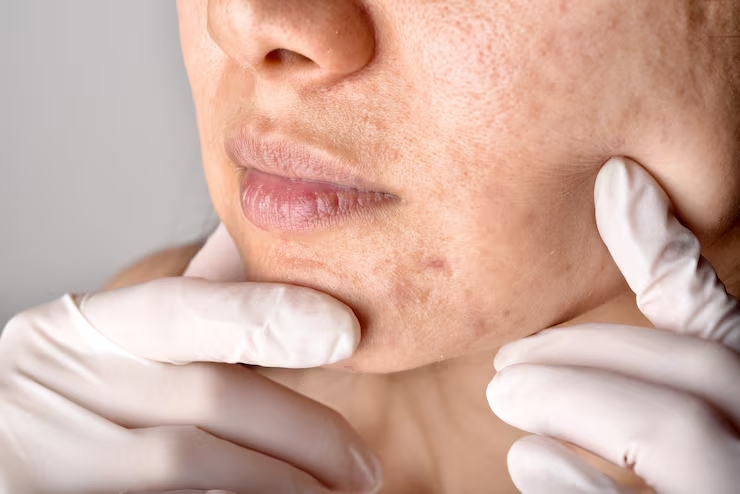
What Are Closed Comedones?
Closed comedones are a type of non-inflammatory acne. They appear as small, skin-colored or slightly white bumps under the surface of the skin. Unlike inflamed pimples, they usually do not look red, swollen, or painful. Instead, they create a rough, uneven texture that can be especially visible under certain lighting or makeup.
Many people describe closed comedones as:
Tiny bumps on the forehead
Skin-colored bumps on the cheeks
Rough texture under the skin
Small white bumps that do not pop easily
Congested skin that looks uneven
Closed comedones are common in acne-prone skin, oily skin, combination skin, and skin that reacts to heavy products. They can also appear when the skin barrier is irritated or when the skin is not exfoliating properly.
The main problem with closed comedones is that they are trapped under the skin. The pore is blocked, but the opening is covered. This is why they do not look like blackheads. They remain closed beneath the surface, making them stubborn and slow to treat.
Why Closed Comedones Are So Frustrating
Closed comedones are frustrating because they often do not respond quickly to basic skincare. They can remain on the skin for weeks or months, especially if the routine does not address the real cause.
Some people try to squeeze them, scrub them, or dry them out with harsh acne products. This usually makes the skin worse.
Squeezing closed comedones can cause:
Inflammation
Redness
Irritation
Post-acne marks
Scarring risk
More visible texture
The correct treatment is not aggressive extraction at home. The correct treatment is to gradually clear the pore, regulate buildup, and prevent new comedones from forming.
Closed comedones require consistency. They do not disappear overnight because the blockage forms inside the follicle. A good routine needs time to normalize skin cell turnover and reduce congestion.
Closed Comedones vs Whiteheads: What Is the Difference?
Closed comedones and whiteheads are closely related, but they are not always used the same way in daily skincare language.
A closed comedone is a clogged pore with a closed surface. It may look like a tiny bump under the skin.
A whitehead is also a closed clogged pore, but it may appear more visibly white at the surface.
Both are forms of comedonal acne, but closed comedones are often flatter, smaller, and more texture-like. They may not look like classic pimples, which is why many people mistake them for skin texture, irritation, or “tiny bumps.”
The important point is that both involve pore blockage.
Treatment focuses on:
Removing excess sebum
Supporting healthy exfoliation
Preventing dead skin buildup
Avoiding pore-clogging products
Maintaining hydration and barrier balance
Closed Comedones vs Blackheads
Closed comedones and blackheads are both clogged pores, but the pore opening is different.
Blackheads are open comedones. The pore is open to the air, and the material inside oxidizes, creating a dark appearance.
Closed comedones are closed beneath the surface. The pore opening is blocked, so the buildup remains trapped under the skin.
This is why blackheads look dark and visible, while closed comedones look like small bumps.
Both are caused by similar factors:
Excess oil
Dead skin buildup
Keratin accumulation
Poor skin cell turnover
Product buildup
However, closed comedones can feel more stubborn because the blockage is trapped beneath the surface.
What Causes Closed Comedones?
Closed comedones form when pores become blocked. This sounds simple, but several skin processes contribute to that blockage.
The main causes include:
Excess sebum production
Dead skin cell buildup
Abnormal keratinization
Heavy or comedogenic products
Inadequate cleansing
Over-exfoliation and barrier damage
Hormonal oil changes
Sweat, friction, and occlusion
Understanding the cause is essential because closed comedones are not always caused by “dirty skin.” In many cases, they happen because the skin is producing oil, shedding cells irregularly, or reacting to products.
1. Excess Sebum Production
Sebum is the natural oil produced by sebaceous glands. It helps protect the skin and maintain moisture. However, when sebum production becomes excessive, it can contribute to clogged pores.
When excess oil mixes with dead skin cells, it can create a sticky plug inside the pore. If the pore opening becomes covered, a closed comedone forms.
Oily and combination skin types are more prone to this because they naturally produce more sebum.
Signs that excess sebum may be contributing to closed comedones include:
Shiny T-zone
Enlarged-looking pores
Frequent blackheads
Congestion on forehead or chin
Bumps that return after cleansing
The goal is not to strip all oil from the skin. Over-drying the skin can trigger more oil production and irritation. The goal is to regulate oil and keep pores clear without damaging the barrier.
2. Dead Skin Cell Buildup
The skin naturally sheds dead cells. In healthy skin, these cells move away from the surface gradually. In acne-prone skin, this process can become irregular.
Dead skin cells may stick together and accumulate inside the pore. When this buildup combines with sebum, the pore becomes blocked.
This is one of the main reasons closed comedones appear as texture. The skin is not renewing smoothly, so small plugs form beneath the surface.
This is also why exfoliating ingredients can help closed comedones. However, exfoliation must be controlled. Too much exfoliation can irritate the skin and worsen the problem.
3. Abnormal Keratinization
Keratin is a structural protein found in the skin. It plays an important role in skin protection, but when keratin buildup becomes excessive inside the follicle, it contributes to clogged pores.
This process is called abnormal keratinization.
Instead of shedding properly, keratin and dead skin cells collect inside the pore. This creates the foundation for comedonal acne.
Closed comedones are often linked to this process because the blockage stays trapped beneath the skin surface.
Ingredients that support better cell turnover can help reduce this buildup over time.
4. Heavy or Pore-Clogging Products
Closed comedones can be triggered by products that are too heavy for your skin type.
Common triggers include:
Rich creams
Heavy oils
Thick sunscreen formulas
Comedogenic makeup
Occlusive primers
Hair products that touch the face
This does not mean all creams or oils are bad. It means the formula must match your skin type.
For acne-prone or congestion-prone skin, lightweight and non-greasy textures are usually better.
If closed comedones appear after starting a new product, especially on the forehead, cheeks, or chin, the product may be too heavy or not suitable for your skin.
5. Inadequate Cleansing
Closed comedones may also form when sunscreen, makeup, sweat, oil, and pollution are not removed properly.
This is especially common when people wear sunscreen or makeup daily but cleanse too lightly at night.
Evening cleansing is important because buildup left on the skin can contribute to congestion.
However, cleansing should not be harsh. Over-cleansing can damage the skin barrier and create irritation.
The goal is effective but gentle cleansing.
For normal to oily and acne-prone skin, Maruderm Purifying Face Cleansing Gel For Normal to Oily Skin can be used as a daily cleanser to help remove excess oil and impurities while supporting a clearer-feeling skin surface.
6. Over-Exfoliation
This may seem surprising, but over-exfoliation can also contribute to closed comedones.
When the skin barrier becomes damaged, the skin can become inflamed, dehydrated, and reactive. In response, it may produce more oil or become less efficient at shedding cells properly.
Over-exfoliation can cause:
Tightness
Burning
Redness
Flaking
Increased oiliness
More bumps
Sensitivity to products
If your closed comedones appeared after using multiple acids, scrubs, retinol, or exfoliating toner pads, your skin may be overwhelmed.
In that case, the solution is not more exfoliation. The solution is barrier repair and a simpler routine.
7. Hormonal Oil Changes
Hormones can influence sebum production. When androgen activity increases, sebaceous glands may produce more oil.
This is why closed comedones can become worse:
Before menstruation
During puberty
During stress
With hormonal fluctuations
Around the jawline or chin
Hormonal closed comedones may appear with deeper acne or recurring congestion.
Topical skincare can help manage the surface symptoms, but persistent hormonal acne may need professional guidance.
8. Sweat, Friction, and Occlusion
Closed comedones can also form when skin is covered, rubbed, or exposed to sweat for long periods.
Common triggers include:
Tight masks
Helmets
Hats
Headbands
Pillow friction
Heavy hair products
Not cleansing after sweating
This is especially common on the forehead, jawline, and cheeks.
Sweat itself is not the only problem. The issue is sweat mixed with oil, friction, bacteria, and occlusive products.
If closed comedones appear in areas where clothing, masks, or hair products touch the skin, friction and occlusion may be contributing.
Why Closed Comedones Often Appear on the Forehead
Forehead closed comedones are extremely common.
They may be triggered by:
Excess oil
Hair products
Sweat
Hats
Not cleansing properly
Heavy sunscreen
Comedogenic makeup
Stress-related oil changes
Hair products are a frequent hidden cause. Styling creams, oils, gels, and leave-in products can transfer to the forehead and clog pores.
If you have forehead bumps, check whether your hair products touch your skin.
Keeping hair away from the face and cleansing the forehead properly can help reduce buildup.
Why Closed Comedones Often Appear on the Chin
Chin closed comedones may be linked to oil production, hormones, friction, or product buildup.
This area is also affected by touching the face, masks, and hormonal changes.
If chin bumps return regularly, the cause may include:
Hormonal fluctuations
Heavy lip products spreading around the mouth
Mask friction
Poor cleansing around the jawline
Thick creams applied too close to the mouth
The chin area can be stubborn because hormonal oil changes often influence it.
Why Closed Comedones Often Appear on the Cheeks
Cheek closed comedones may be linked to makeup, sunscreen, pillowcases, phone contact, or heavy moisturizers.
Common causes include:
Foundation buildup
Not removing sunscreen fully
Dirty pillowcases
Phone bacteria and oil
Heavy night creams
Hair products touching cheeks
If closed comedones are mostly on the cheeks, examine your product layering and cleansing habits.
How to Treat Closed Comedones
The treatment strategy should focus on gradual pore clearing, not aggressive drying.
The main goals are:
Remove excess oil
Support healthy exfoliation
Prevent dead skin buildup
Avoid pore-clogging products
Maintain hydration
Protect the skin barrier
Prevent post-acne marks
Closed comedones usually improve with consistency, but they take time. Since they form beneath the skin surface, they cannot disappear instantly.
The Best Ingredients for Closed Comedones
Several ingredient categories can help closed comedones.
1. Salicylic Acid
Salicylic acid is one of the most useful ingredients for closed comedones because it is oil-soluble. This means it can penetrate into oily pores and help dissolve buildup.
It is especially helpful for:
Oily skin
Clogged pores
Blackheads
Whiteheads
Closed comedones
Congested texture
A product such as Maruderm BHA Pore Cleaning Daily Toner can fit into a closed comedone routine as a pore-focused exfoliating step.
However, salicylic acid should not be overused. Start slowly and increase only if your skin tolerates it.
2. Retinol
Retinol helps support skin cell turnover. This makes it useful for closed comedones because irregular cell shedding is one of the main causes of clogged pores.
Retinol can help reduce:
Closed comedones
Bumpy texture
Rough skin
Recurring clogged pores
However, retinol can cause dryness or irritation if introduced too quickly. It should be used gradually, especially for sensitive skin.
3. Niacinamide
Niacinamide helps support oil balance, barrier strength, and a more even-looking complexion.
It is not a direct exfoliant, but it can be helpful in closed comedone routines because it supports the skin environment.
Niacinamide is especially useful if closed comedones appear with:
Oiliness
Redness
Enlarged-looking pores
Acne marks
Skin sensitivity
Barrier weakness
4. Azelaic Acid
Azelaic acid can support acne-prone skin, reduce visible redness, and improve uneven tone. It may be useful when closed comedones are accompanied by inflammation or post-acne marks.
It is often well tolerated compared with stronger actives, making it useful for sensitive acne-prone skin.
5. Lightweight Hydration
Hydration is important even for clogged skin.
When the skin is dehydrated, it can become more reactive and produce more oil. This may worsen congestion.
The key is to use lightweight hydration rather than heavy, pore-clogging products.
Hydration helps:
Support the skin barrier
Reduce irritation
Improve product tolerance
Prevent overproduction of oil caused by dehydration
Best Beginner Routine for Closed Comedones
A beginner routine should be simple. Do not start too many active ingredients at once.
Morning Routine
Cleanser
Lightweight moisturizer if needed
Sunscreen
Evening Routine
Cleanser
BHA toner 2–3 times per week
Moisturizer if needed
This routine focuses on cleansing, controlled exfoliation, hydration, and protection.
If your skin tolerates this well for several weeks, additional ingredients such as retinol or azelaic acid can be introduced gradually.
Why Sunscreen Matters for Closed Comedones
Sunscreen does not directly remove closed comedones, but it is still important.
When closed comedones become inflamed or turn into pimples, they may leave post-acne marks. UV exposure can make these marks darker and longer-lasting.
Daily sunscreen helps protect the skin and maintain results from exfoliating or acne-supporting ingredients.
For acne-prone skin, choose sunscreen that feels lightweight and comfortable. Maruderm SPF 50+ Anti-Blemish Sun Cream can be used in routines where closed comedones are accompanied by blemishes or uneven tone.
What Not to Do with Closed Comedones
Avoid these common mistakes:
Do not squeeze them aggressively
Do not scrub the skin harshly
Do not use multiple exfoliants daily
Do not skip moisturizer if skin feels tight
Do not use heavy products if skin is congested
Do not change products every few days
Do not expect overnight results
Closed comedones need patience. A gentle, consistent routine is more effective than aggressive treatment.
FAQ
1. What are closed comedones?
Closed comedones are small clogged pores that appear as skin-colored or white bumps under the surface of the skin.
2. What causes closed comedones?
They are caused by excess sebum, dead skin buildup, keratin accumulation, clogged pores, heavy products, and irregular skin cell turnover.
3. Are closed comedones acne?
Yes. Closed comedones are a type of non-inflammatory acne.
4. Why do I have tiny bumps on my forehead?
Forehead bumps may be caused by oil, sweat, hair products, sunscreen buildup, or clogged pores.
5. Can closed comedones turn into pimples?
Yes. If the clogged pore becomes inflamed, it can develop into a red or painful pimple.
6. Should I pop closed comedones?
No. Squeezing can cause inflammation, irritation, acne marks, and scarring.
7. Is salicylic acid good for closed comedones?
Yes. Salicylic acid can help clear oil and buildup inside pores.
8. Is retinol good for closed comedones?
Yes. Retinol supports skin cell turnover and can help prevent clogged pores over time.
9. How long does it take to treat closed comedones?
Most routines need 6–12 weeks of consistent use to show visible improvement.
10. What is the best routine for closed comedones?
A simple routine with gentle cleansing, controlled BHA exfoliation, lightweight hydration, and sunscreen is usually best.
How to Treat Closed Comedones Without Damaging the Skin Barrier
Treating closed comedones requires patience, structure, and consistency. The goal is not to force the bumps out of the skin overnight. The goal is to gradually clear the pores, normalize skin cell turnover, reduce excess sebum buildup, and prevent new blockages from forming.
Many people make closed comedones worse because they panic and start using too many strong products at once. They scrub the skin, apply exfoliating acids daily, add retinol too quickly, skip moisturizer, and expect immediate results. This approach usually damages the skin barrier and creates more irritation.
Closed comedones need a balanced routine.
A good treatment plan should focus on:
Gentle cleansing
Controlled exfoliation
Oil regulation
Skin barrier support
Lightweight hydration
Daily sun protection
Avoiding pore-clogging products
When these steps are followed consistently, closed comedones can gradually become less visible and the skin texture can improve.
Step 1: Cleanse Without Stripping the Skin
Cleansing is the first step in treating closed comedones because clogged pores often form when oil, sweat, sunscreen, makeup, and dead skin cells accumulate on the skin.
However, harsh cleansing can make the problem worse.
If the cleanser removes too much oil, the skin can become dehydrated and irritated. Dehydrated skin may produce more oil to compensate, which can contribute to more congestion.
The ideal cleanser for closed comedones should remove buildup without leaving the skin tight or uncomfortable.
For normal to oily skin, Maruderm Purifying Face Cleansing Gel For Normal to Oily Skin can be used to help remove excess oil and impurities while supporting a cleaner skin surface.
Use cleanser gently. Do not scrub the face aggressively.
Best cleansing habits:
Cleanse once in the morning if needed
Cleanse every evening
Use lukewarm water
Avoid hot water
Massage gently
Do not use rough cleansing tools
Pat dry with a clean towel
Closed comedones are not caused by laziness or poor hygiene. Over-cleansing is not the solution. Consistent, gentle cleansing is.
Step 2: Use BHA Exfoliation Carefully
BHA exfoliation is one of the most useful steps for closed comedones.
BHA, also known as beta hydroxy acid, is oil-soluble. This means it can move through sebum and work inside the pore. This makes it especially helpful for clogged pores, blackheads, whiteheads, oily skin, and closed comedones.
Salicylic acid is the most common BHA used in skincare.
It helps:
Dissolve excess oil buildup
Remove dead skin cells inside pores
Reduce clogged pores
Improve bumpy texture
Prevent new comedones from forming
Maruderm BHA Pore Cleaning Daily Toner can be used as a pore-focused step in a closed comedone routine.
However, even though BHA can be effective, it should not be overused.
Using BHA too often can cause:
Dryness
Redness
Stinging
Flaking
Barrier damage
Increased sensitivity
More visible irritation
Start slowly.
A good beginner frequency is 2–3 times per week in the evening. If the skin tolerates it well, frequency can be adjusted gradually.
Do not use BHA multiple times a day. Do not combine it with several other exfoliating products at the same time.
Closed comedones respond better to steady use than aggressive use.
Step 3: Avoid Heavy and Pore-Clogging Products
One of the biggest hidden causes of closed comedones is product buildup.
Even a good skincare routine can fail if the products are too rich for your skin type.
Products that may contribute to closed comedones include:
Heavy creams
Thick oils
Rich sleeping masks
Occlusive primers
Heavy foundations
Comedogenic sunscreen formulas
Hair oils and styling creams
Thick balms around the mouth or cheeks
This does not mean all creams or oils are bad. It means they must be suitable for your skin.
If your skin is oily, combination, or congestion-prone, lightweight textures are usually safer.
A product may be too heavy if:
Bumps appear after starting it
Skin feels coated or greasy
Makeup sits unevenly
Pores look more congested
Forehead or cheek bumps increase
Skin feels oily but dehydrated
If closed comedones started after adding a new product, stop using that product for a few weeks and observe the skin.
Product elimination is sometimes necessary to identify the trigger.
Step 4: Do Not Squeeze Closed Comedones
Squeezing closed comedones is one of the fastest ways to turn a small bump into a bigger problem.
Because closed comedones are trapped under the skin, they usually do not extract easily. Forcing them can rupture the pore wall and push inflammation deeper into the skin.
This can lead to:
Red pimples
Painful inflammation
Post-acne marks
Scarring
Skin irritation
More texture
If a closed comedone is not ready to come out, do not force it.
Professional extraction may be helpful in some cases, but home squeezing is risky.
The safer approach is to use ingredients that gradually soften and clear the blockage over time.
Step 5: Support Skin Cell Turnover
Closed comedones form when the skin does not shed dead cells properly. This is why supporting healthy cell turnover is important.
Skin cell turnover is the process where old skin cells move away and new skin cells replace them. When this process becomes irregular, dead cells can collect inside pores and contribute to bumps.
Ingredients that support turnover can help closed comedones, but they must be introduced carefully.
Options include:
BHA exfoliation
Retinol
Azelaic acid
Gentle exfoliating routines
Do not start all of them at the same time.
A simple routine with BHA 2–3 times per week may be enough for many people.
If closed comedones are persistent, retinol can be added later, but only after the skin barrier is stable.
Step 6: Keep the Skin Hydrated
Hydration is often ignored in closed comedone routines because people assume bumpy skin needs drying.
This is a mistake.
When the skin is dehydrated, it can become more reactive and produce more oil. This can make pores more congested.
Hydrated skin is more flexible, balanced, and better able to tolerate active ingredients.
Signs your skin needs more hydration:
Tightness after cleansing
Flaking
Dullness
Stinging from products
Skin feels oily but dry underneath
Makeup looks patchy
Bumps look more visible
Use lightweight hydration rather than heavy products.
The goal is to support the skin barrier without clogging pores.
Step 7: Use Sunscreen Every Morning
Sunscreen does not directly remove closed comedones, but it is essential in a complete acne-prone routine.
Why?
Because closed comedones can become inflamed. Once they become inflamed, they may leave post-acne marks. UV exposure can darken these marks and make them last longer.
Daily sunscreen helps protect the skin while active ingredients work.
For acne-prone skin with uneven tone or blemish concerns, Maruderm SPF 50+ Anti-Blemish Sun Cream can be used as the final morning step.
Sunscreen also supports long-term skin health by protecting against UV-related inflammation, dullness, and pigmentation.
If sunscreen feels heavy, do not skip SPF. Choose a lighter formula instead.
Best Skincare Routine for Closed Comedones
A routine for closed comedones should be simple and repeatable.
Do not build a complicated routine with too many active ingredients. The more steps you add, the higher the risk of irritation.
Morning Routine
Cleanser
Lightweight hydration if needed
Sunscreen
This routine protects the skin during the day and prevents unnecessary product overload.
Evening Routine
Cleanser
BHA toner 2–3 times per week
Lightweight hydration if needed
On non-BHA nights, focus on hydration and barrier support.
Weekly Routine Example for Beginners
A weekly structure helps prevent overuse.
Monday: BHA toner
Tuesday: Hydration only
Wednesday: BHA toner
Thursday: Hydration only
Friday: BHA toner
Saturday: Hydration only
Sunday: Hydration only
This schedule gives the skin time to clear buildup while still allowing recovery days.
If your skin becomes dry, reduce BHA to 1–2 times per week.
If your skin tolerates the routine well after several weeks, frequency can be adjusted.
Routine for Oily Skin with Closed Comedones
Oily skin usually needs regular pore care.
Best focus:
Gentle cleansing
BHA exfoliation
Lightweight hydration
Non-greasy sunscreen
Morning:
Cleanser
Sunscreen
Evening:
Cleanser
BHA toner 2–3 times per week
Lightweight hydration if needed
Oily skin should not be stripped. Removing all oil can make the skin produce more sebum and worsen congestion.
Routine for Dry Skin with Closed Comedones
Dry skin can still get closed comedones.
This often happens when dead skin cells accumulate and the skin barrier is weak.
Best focus:
Gentle cleansing
Low-frequency exfoliation
Barrier support
Hydration
Morning:
Gentle cleanse or rinse
Lightweight hydration
Sunscreen
Evening:
Cleanser
BHA once or twice per week
Hydration
Dry skin should avoid strong exfoliation. If the skin becomes tight or flaky, reduce active ingredients immediately.
Routine for Sensitive Skin with Closed Comedones
Sensitive skin needs the slowest approach.
Closed comedones may be present, but if the skin barrier is reactive, aggressive pore treatment can make the condition worse.
Best focus:
Barrier repair
Minimal routine
Low-frequency exfoliation
Avoiding harsh actives
Morning:
Gentle cleanse
Hydration
Sunscreen
Evening:
Cleanser
BHA once weekly
Hydration
If even once-weekly BHA causes burning or redness, pause exfoliation and focus on barrier repair first.
Routine for Forehead Closed Comedones
Forehead closed comedones often come from oil, sweat, hair products, or sunscreen buildup.
Best steps:
Keep hair products away from the forehead
Wash pillowcases regularly
Cleanse after sweating
Avoid heavy forehead creams
Use BHA consistently
Do not wear tight hats for long periods
If hair styling products touch the skin, they may be contributing to bumps.
Forehead congestion often improves when haircare and skincare habits are adjusted together.
Routine for Chin Closed Comedones
Chin closed comedones may be related to hormones, lip products, mask friction, or touching the face.
Best steps:
Avoid heavy lip balms spreading onto the chin
Cleanse around the mouth carefully
Reduce mask friction when possible
Avoid touching the chin
Use BHA consistently but gently
Do not squeeze bumps
If chin bumps appear cyclically, hormones may be involved.
Skincare can help manage congestion, but persistent hormonal acne may need professional support.
Routine for Cheek Closed Comedones
Cheek closed comedones are often linked to makeup, sunscreen, pillowcases, phone contact, and heavy moisturizers.
Best steps:
Remove sunscreen and makeup thoroughly
Clean phone screens regularly
Change pillowcases often
Avoid heavy cheek products
Use lightweight hydration
Keep BHA consistent but not excessive
If bumps are mostly on one cheek, consider phone contact or sleeping position.
How Long Does It Take to Get Rid of Closed Comedones?
Closed comedones take time.
A realistic timeline:
Weeks 1–2: Skin adjusts to routine
Weeks 3–4: Texture may begin to feel smoother
Weeks 6–8: Fewer new bumps may appear
Weeks 8–12: Existing comedones may become less visible
Do not judge the routine too early.
Because closed comedones form under the skin, visible improvement can take several weeks.
Consistency is more important than intensity.
Purging vs Breakout: What to Expect
When using BHA or retinol, some people experience purging.
Purging happens when existing clogged pores come to the surface faster due to increased skin renewal.
However, not every breakout is purging.
Signs It May Be Purging
Breakouts occur in usual congestion areas
Bumps appear where you normally get closed comedones
Skin is not severely irritated
The reaction improves over several weeks
Signs It May Be Irritation
Burning
Stinging
Redness
Peeling
New breakouts in unusual areas
Skin feels raw or tight
Bumps worsen rapidly
If irritation happens, stop active ingredients temporarily and simplify your routine.
Why Closed Comedones Sometimes Get Worse Before Better
Closed comedones may appear worse at first if clogged pores begin moving toward the surface.
However, this should be temporary and manageable.
If the skin becomes painful, red, or inflamed, the routine may be too aggressive.
A good routine should gradually improve texture without causing constant irritation.
When to Add Retinol
Retinol can be useful for persistent closed comedones because it supports skin cell turnover.
However, it should not be the first active if your skin is already irritated.
Add retinol only when:
Skin is not burning
Skin barrier feels stable
BHA is tolerated
Skin is not overly dry
You can use sunscreen daily
Start retinol 1–2 nights per week and avoid using it on the same night as BHA at first.
When to Add Azelaic Acid
Azelaic acid may be useful if closed comedones are accompanied by redness, blemishes, or post-acne marks.
It is often better tolerated than stronger actives and can support a clearer, calmer-looking complexion.
Use azelaic acid carefully if your routine already includes BHA.
Do not add too many treatment steps at once.
What If Closed Comedones Do Not Improve?
If closed comedones do not improve after 8–12 weeks of consistent care, check these factors:
Are you using heavy products?
Are you cleansing properly at night?
Are hair products touching your face?
Are you over-exfoliating?
Are you skipping sunscreen?
Are you changing products too often?
Are hormones involved?
Are the bumps actually fungal folliculitis or milia instead?
Not every small bump is a closed comedone. If the bumps are itchy, very uniform, or do not respond to typical comedone care, the cause may be different.
Common Mistakes When Treating Closed Comedones
1. Using BHA Every Day Immediately
This can irritate the skin and damage the barrier.
Start slowly.
2. Scrubbing the Skin
Physical scrubs can worsen irritation and inflammation.
Closed comedones need chemical exfoliation and consistency, not harsh friction.
3. Skipping Sunscreen
If bumps become inflamed, they can leave marks. Sunscreen helps prevent those marks from darkening.
4. Using Heavy Creams
Rich textures may worsen congestion if they are not suitable for your skin type.
5. Changing Products Too Often
Closed comedones need time to improve. Constant product changes make it impossible to know what works.
FAQ
1. What is the best treatment for closed comedones?
Controlled BHA exfoliation, gentle cleansing, lightweight hydration, and consistent sunscreen use are usually the best starting points.
2. How often should I use BHA for closed comedones?
Start 2–3 times per week. Sensitive skin may need only once weekly.
3. Can I use BHA every day?
Some skin types can tolerate daily use, but beginners should not start daily because it may cause irritation.
4. Should I moisturize if I have closed comedones?
Yes. Use lightweight hydration to support the skin barrier without clogging pores.
5. Can sunscreen cause closed comedones?
Heavy sunscreen formulas may contribute to congestion, but sunscreen itself is essential. Choose a lightweight acne-prone formula.
6. How long does it take to clear closed comedones?
Most routines need 6–12 weeks of consistent use.
7. Can closed comedones purge?
Yes, active ingredients like BHA or retinol can bring existing congestion to the surface temporarily.
8. Should I use retinol or BHA first?
BHA is usually a better first step for oily clogged pores. Retinol can be added later if needed.
9. Can closed comedones be caused by makeup?
Yes, heavy or poorly removed makeup can contribute to clogged pores.
10. What is the biggest mistake when treating closed comedones?
Over-exfoliating and squeezing the bumps are the biggest mistakes.
Long-Term Strategy: How to Prevent Closed Comedones from Coming Back
Treating closed comedones is only half of the process. The bigger goal is preventing them from returning.
Closed comedones are usually not a one-time skin problem. They often come back when the same triggers remain active. Even after the skin becomes smoother, pores can become clogged again if excess sebum, dead skin buildup, heavy products, or inconsistent cleansing continue.
This is why long-term prevention matters.
A good closed comedone routine should not be aggressive. It should be consistent, balanced, and easy to maintain. The goal is to keep pores clear without damaging the skin barrier.
Closed comedones come back most often because of:
Irregular exfoliation
Heavy skincare products
Poor sunscreen or makeup removal
Excess oil production
Hormonal changes
Sweat and friction
Damaged skin barrier
Product overload
Inconsistent routine
To keep the skin smooth, you need a routine that prevents buildup before it turns into visible bumps.
Why Closed Comedones Keep Coming Back
Closed comedones return because the skin naturally continues producing sebum and shedding dead skin cells. If these processes are not controlled properly, pores can become blocked again.
Even if a BHA toner or active treatment clears existing bumps, new comedones may form if the skin remains congested.
This is why maintenance is important.
You should not stop your routine completely once the bumps improve. Instead, you should reduce treatment frequency and continue a simple maintenance plan.
For example, if you used BHA three times per week during the treatment phase, you may reduce it to one or two times per week once the skin becomes clearer.
The goal is to maintain results without over-exfoliating.
The Long-Term Role of Cleansing
Cleansing remains one of the most important steps in preventing closed comedones.
Throughout the day, the skin collects:
Sebum
Sweat
Sunscreen
Makeup
Pollution
Dust
Product residue
If these are not removed properly, they can contribute to clogged pores.
However, cleansing too harshly can also cause problems. If the skin becomes stripped, it may produce more oil or become irritated. This can make closed comedones worse.
A cleanser should leave the skin feeling clean but not tight.
Maruderm Purifying Face Cleansing Gel For Normal to Oily Skin can be used as part of a routine for normal to oily, congestion-prone skin to help remove impurities and excess oil.
Use it gently and consistently. Do not scrub or over-cleanse.
The Long-Term Role of BHA
BHA is one of the most useful ingredients for preventing closed comedones because it helps keep pores clear.
Closed comedones form inside pores, so surface cleansing alone is often not enough. A pore-focused exfoliating ingredient can help reduce buildup before it becomes trapped.
Maruderm BHA Pore Cleaning Daily Toner can be used as a maintenance step for clogged pores, oily skin, and bumpy texture.
However, BHA should be used carefully.
Using too much BHA can lead to:
Dryness
Redness
Irritation
Flaking
Damaged barrier
Increased sensitivity
More breakouts from irritation
For long-term maintenance, many skin types do well with BHA two or three times per week. Sensitive skin may need less.
The best frequency is the one your skin can tolerate without becoming dry or irritated.
The Long-Term Role of Sunscreen
Sunscreen does not directly remove closed comedones, but it is still essential.
Closed comedones can sometimes become inflamed. When that happens, they may leave post-acne marks. UV exposure can make these marks darker and more persistent.
Daily sunscreen helps protect the skin while acne-supporting ingredients work.
For blemish-prone skin, Maruderm SPF 50 Anti Blemish Sun Cream can be used as the final morning step to protect the skin and help prevent post-acne marks from becoming more visible.
The key is to choose a sunscreen texture that does not feel too heavy for your skin. If sunscreen feels greasy or uncomfortable, you may apply too little or skip it completely. That reduces protection.
Use sunscreen every morning and remove it properly at night.
Maintenance Routine for Closed Comedones
Once closed comedones begin to improve, your routine should shift from active treatment to prevention.
A maintenance routine should be simple.
Morning Routine
Cleanser
Lightweight hydration if needed
Sunscreen
Evening Routine
Cleanser
BHA toner two to three times per week
Lightweight hydration if needed
This routine helps keep pores clear while reducing the risk of over-treatment.
On non-BHA nights, focus on hydration and recovery.
Weekly Maintenance Schedule
A weekly schedule helps prevent overuse.
Balanced Skin Schedule
Monday: BHA toner
Tuesday: Hydration only
Wednesday: Hydration only
Thursday: BHA toner
Friday: Hydration only
Saturday: BHA toner if needed
Sunday: Hydration only
Sensitive Skin Schedule
Monday: BHA toner
Tuesday: Hydration only
Wednesday: Hydration only
Thursday: Hydration only
Friday: BHA toner
Saturday: Hydration only
Sunday: Hydration only
Oily Skin Schedule
Monday: BHA toner
Tuesday: Hydration only
Wednesday: BHA toner
Thursday: Hydration only
Friday: BHA toner
Saturday: Hydration only
Sunday: Hydration only
The correct schedule depends on your skin response. If the skin becomes dry, reduce BHA. If bumps return, check cleansing habits, product heaviness, and consistency before increasing active ingredients.
How to Know If Your Routine Is Working
A closed comedone routine is working when the skin improves gradually without irritation.
Signs of improvement include:
Skin feels smoother
Fewer new bumps appear
Existing bumps become less visible
Pores look clearer
Makeup applies more evenly
Skin feels less congested
Texture becomes more refined
Breakouts become less frequent
Progress is usually slow. Closed comedones form under the skin, so visible improvement takes time.
A good routine should make the skin feel healthier, not stripped or uncomfortable.
How to Know If Your Routine Is Too Strong
If your routine is too aggressive, closed comedones may look worse.
Signs of over-treatment include:
Burning
Stinging
Tightness
Flaking
Redness
Sudden sensitivity
More bumps
Inflamed pimples
Skin feeling oily but dry underneath
If this happens, reduce active ingredients immediately.
Stop exfoliating temporarily and return to a basic routine:
Cleanser
Moisturizer if needed
Sunscreen
Once the skin feels calm again, BHA can be reintroduced slowly.
What Ingredients to Avoid If You Have Closed Comedones
Some products can make closed comedones worse, especially if your skin is oily or congestion-prone.
Avoid or be careful with:
Very heavy creams
Thick facial oils
Rich sleeping masks
Heavy occlusive primers
Comedogenic makeup
Waxy balms around acne-prone areas
Hair oils that touch the face
Strong scrubs
Too many exfoliating products
Multiple active ingredients in one routine
The issue is not that every rich product is bad. The issue is that closed-comedone-prone skin usually needs lighter textures and fewer layers.
If a product makes your skin feel coated, greasy, or congested, it may not be suitable.
Makeup and Closed Comedones
Makeup can contribute to closed comedones if it is heavy, pore-clogging, or not removed properly.
Foundation, concealer, primer, and setting products can build up on the skin throughout the day. If they mix with oil and sunscreen, they can increase congestion.
This does not mean you must stop wearing makeup. It means makeup removal and product choice matter.
To reduce makeup-related closed comedones:
Choose lightweight formulas
Avoid heavy layers
Remove makeup fully at night
Clean makeup brushes regularly
Avoid sleeping with makeup
Do not apply thick primer over congested areas
Check whether new makeup triggers bumps
If closed comedones worsen after starting a new foundation or primer, stop using it temporarily and observe your skin.
Hair Products and Closed Comedones
Hair products are a common hidden trigger, especially for forehead and cheek bumps.
Products that may contribute include:
Hair oils
Leave-in conditioners
Styling creams
Gels
Pomades
Heat protectant creams
Heavy masks that touch the hairline
These products can transfer to the forehead, temples, cheeks, and jawline.
If your closed comedones appear mostly near the hairline, forehead, or sides of the face, hair products may be contributing.
Prevention tips:
Keep hair away from the face
Avoid applying hair oils near the hairline
Wash pillowcases regularly
Cleanse the forehead properly at night
Avoid sleeping with heavy hair products touching the skin
Sometimes improving hair-product habits can make a major difference in forehead closed comedones.
Lifestyle Triggers That Can Worsen Closed Comedones
Closed comedones are influenced by skincare, but lifestyle habits can also contribute.
Common triggers include:
Sweating without cleansing afterward
Wearing tight hats or helmets
Sleeping on dirty pillowcases
Touching the face often
Using dirty makeup brushes
Holding the phone against the cheek
Wearing tight masks for long periods
High stress levels
Irregular sleep
Hormonal changes
These factors may not be the only cause, but they can worsen congestion.
Small habit changes can support clearer skin.
How to Prevent Closed Comedones After Exercise
Sweat can mix with oil, sunscreen, and bacteria on the skin. If it stays on the skin too long, it may contribute to clogged pores.
After exercise:
Cleanse as soon as possible
Avoid sitting in sweaty clothing for long periods
Do not rub the face with dirty towels
Keep hair away from the forehead
Avoid heavy creams before workouts
If you cannot cleanse immediately, gently rinse the face with water and cleanse properly later.
Exercise is not bad for acne-prone skin, but post-workout hygiene matters.
How to Prevent Closed Comedones from Sunscreen
Sunscreen is essential, but some formulas may feel too heavy for congestion-prone skin.
To prevent sunscreen-related bumps:
Choose lightweight sunscreen
Apply enough but avoid unnecessary layering underneath
Let each layer absorb
Remove sunscreen properly at night
Avoid using heavy creams under sunscreen if your skin is oily
Do not skip cleansing in the evening
If sunscreen seems to cause closed comedones, the solution is not to stop sun protection. The solution is to choose a more suitable texture and cleanse properly.
Closed Comedones and Skin Barrier Damage
A damaged skin barrier can make closed comedones harder to treat.
When the barrier is damaged, the skin may become:
Irritated
Dehydrated
Red
Sensitive
Oily and dry at the same time
Less tolerant of actives
In this state, using more exfoliation often makes the skin worse.
If your closed comedones appear with burning, peeling, or tightness, focus on barrier repair first. Once the skin feels calm, active ingredients can be reintroduced gradually.
Clear skin depends on a healthy barrier.
Do Closed Comedones Go Away Naturally?
Some closed comedones may eventually go away on their own, but many persist without proper routine support.
If the underlying causes remain active, new comedones will keep forming.
Closed comedones are more likely to improve when you:
Cleanse consistently
Use BHA carefully
Avoid heavy products
Keep the skin hydrated
Use sunscreen daily
Remove sunscreen and makeup properly
Avoid squeezing
Waiting without changing the routine may not be enough if congestion is ongoing.
Can Closed Comedones Be Permanently Removed?
Closed comedones can be treated and controlled, but they may return if triggers continue.
There is no permanent one-time cure because the skin continues to produce oil and shed dead cells.
The goal is long-term control.
With the right routine, closed comedones can become much less frequent and less visible.
Maintenance is the key.
When to See a Dermatologist
If closed comedones do not improve after 8–12 weeks of consistent skincare, professional help may be needed.
You should consider seeing a dermatologist if:
Bumps are spreading
Skin becomes inflamed
Comedones turn into painful acne
You develop scarring
Home skincare causes irritation
Bumps are itchy or very uniform
You are unsure if they are closed comedones
Acne is linked to hormonal symptoms
Some bumps may look like closed comedones but actually be milia, fungal folliculitis, irritation bumps, or another skin condition.
Correct diagnosis matters.
Myths About Closed Comedones
Myth 1: Closed Comedones Mean Your Skin Is Dirty
Closed comedones are not simply caused by dirt. They are caused by oil, dead skin, keratin buildup, and pore blockage.
Cleansing helps, but over-cleansing can make the skin worse.
Myth 2: Scrubbing Will Remove Them Faster
Scrubbing does not clear closed comedones safely. It can irritate the skin and turn small bumps into inflamed acne.
Chemical exfoliation and consistency work better than harsh friction.
Myth 3: You Should Dry Them Out
Drying the skin aggressively can damage the barrier and increase irritation.
Closed comedones need pore care, not harsh drying.
Myth 4: Moisturizer Causes All Closed Comedones
Some heavy moisturizers can contribute to congestion, but hydration itself is not the problem.
The key is choosing lightweight hydration that suits your skin type.
Myth 5: They Should Disappear in a Few Days
Closed comedones take time because they form under the skin. Most routines need several weeks to show visible improvement.
Final Routine for Closed Comedones
A strong closed comedone routine should stay simple.
Morning
Cleanser
Lightweight hydration if needed
Maruderm SPF 50 Anti Blemish Sun Cream
Evening
Maruderm Purifying Face Cleansing Gel For Normal to Oily Skin
Maruderm BHA Pore Cleaning Daily Toner two to three times per week
Lightweight hydration if needed
Non-Exfoliation Nights
Cleanser
Hydration only
This routine helps reduce buildup while protecting the skin barrier.
Do not add too many actives at once. Let the skin improve gradually.
Final Perspective: The Right Way to Treat Closed Comedones
Closed comedones are stubborn because they form beneath the surface of the skin. They are not usually solved by scrubbing, squeezing, or drying the skin.
The right approach is to keep pores clear, support healthy skin renewal, avoid heavy products, and maintain a consistent routine.
The most effective strategy includes:
Gentle cleansing
Controlled BHA exfoliation
Lightweight hydration
Daily sunscreen
Proper makeup and sunscreen removal
Avoiding product overload
Patience
Closed comedones improve slowly, but they can improve significantly with the right routine.
Consistency matters more than intensity.
FAQ (Part 3)
1. Why do closed comedones keep coming back?
They return when oil, dead skin buildup, heavy products, or inconsistent cleansing continue to clog pores.
2. Can closed comedones be prevented?
Yes. Regular cleansing, controlled exfoliation, lightweight hydration, and avoiding pore-clogging products can help prevent them.
3. How often should I use BHA for maintenance?
Most skin types can use BHA two to three times per week. Sensitive skin may need less.
4. Can sunscreen cause closed comedones?
Heavy sunscreen formulas may contribute to congestion, but sunscreen is still essential. Choose a lightweight formula and remove it properly at night.
5. Can makeup cause closed comedones?
Yes, heavy or poorly removed makeup can contribute to clogged pores.
6. Can hair products cause forehead bumps?
Yes, hair oils, styling creams, and leave-in products can transfer to the forehead and clog pores.
7. Should I scrub closed comedones?
No. Scrubbing can irritate the skin and make bumps worse.
8. Can closed comedones go away without treatment?
Some may improve naturally, but many persist if the causes are not addressed.
9. When should I see a dermatologist?
If closed comedones do not improve after 8–12 weeks, become inflamed, or you are unsure what the bumps are, seek professional advice.
10. What is the best long-term routine for closed comedones?
A simple routine with gentle cleansing, BHA exfoliation two to three times per week, lightweight hydration, and daily sunscreen is best.